 All the books in this review were read via online reader copies, but are currently available.
My saved reader link emails had a major deletion overhaul recently. Once over 1,000 it’s down to less than 600. But not just almost 600 titles. That is almost 600 emails with some having multiple links. One email had seven links to different picture books. During lunch one day, I took the time to read three of them. 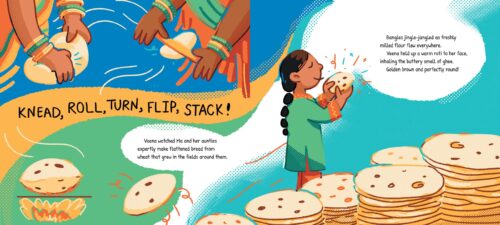
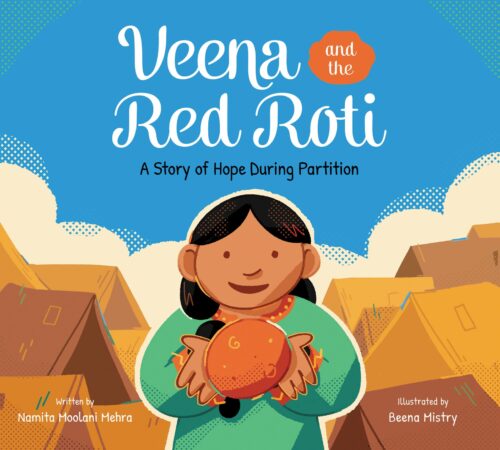
Veena and the Red Roti: A Story of Hope During Partition by Namita Moolani Mehra and illustrated by Beena Mistry was a book I liked, but had bumps. The main one was that a few pieces of history were assumed, but talked about afterwards at the end. But overall, that’s not the real story. Yes, Veena (our point of view character) has to leave her home due to events far beyond her understanding, but it is really about how one child was resourceful and found a way to bring home with her when her family leaves due to those historical events of 1947. Much is going on for the adult reader, but the child can just enjoy things. The afterwards (including a glossary) allows your child to grow with the book and it shows also that being a refugee (even if you do not consider yourself one) is not a new “thing” and therefore is relatable to today’s events.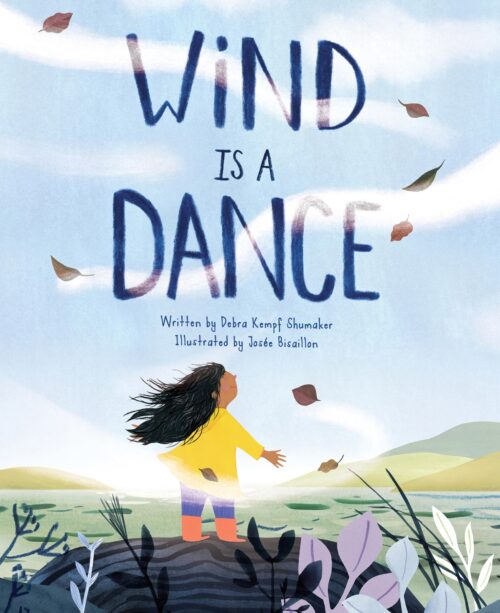
Wind Is a Dance by Debra Kempf Shumaker and illustrated by Josee Bisaillon was a nice inbetween story as the first was fairly intense and the third a bit more heavy. This book is both poetry and science fact. The story of the different types of wind is compared to dancing. The breeze is soft, the hurricane fierce movements. There is a poem or a piece of the main story and then in a small corner box scientific information about the wind. Afterwards include scales of measuring winds, glossary and more. Each page has the text melting into the images which are colorful, but not deeply represented. Things are light, even with the more intense storms and such. It’s not an easy read, but not overwhelming. It is a “take your time” story that lets you dance with the winds.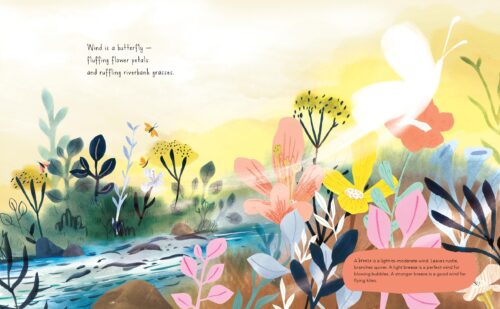
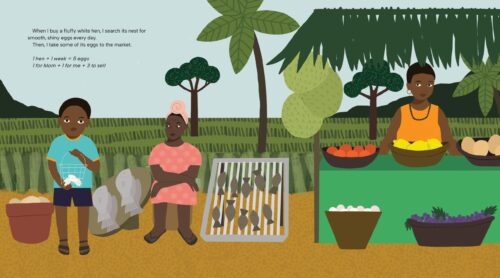
One Hen and Then: The Story of a Small Loan and a Big Dream by Katie Smith Milway, Mary Beth Leatherdale and Tequitia Andrews (illustrator) was the third story, which is easy at first, but goes deeper. A child convinces his mother to give him leftover money to buy a chicken. This chicken provides not only eggs for himself and mother but three extras to sell. He does this enough times to pay back his loan to his mother and buys more chickens. Saving enough for his school fees and uniforms, helping him learn more about chickens,making more money, and going off to university to become a successful businessman in the poultry industry. He also will be able to help others like him. Based on real events, the idea of hardwork and perseverance is not new, but told in a fresh way. There is an extra at the end that talks about the real man and other pieces of the story. 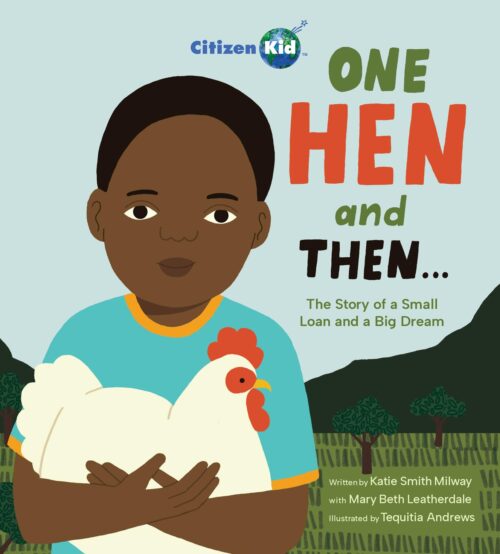
Both the first and third stories have images that are more cartoonlike and not as realistic as the second one. These images are not overly busy, but he first has more content to them, more color as well. With the third book being simplified to bare essentials. This contrast helps keep the stories lighter, but with the third it shows things are not as challenging as the first book, even though both families of both books are starting from the same place with practically nothing to back them.