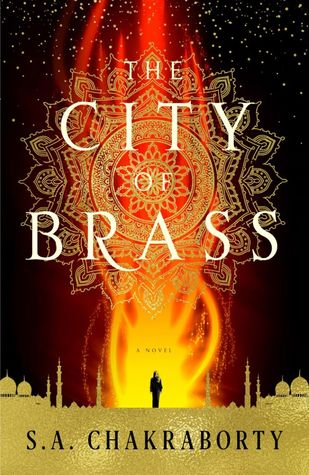
Bingo Square: One (first book of the Daevabad trilogy)
This was my third time reading this novel (book club picked it), and I swear I enjoy this series more every time I read it (I haven’t actually reread the other two yet). This was one of those series I kept seeing and then hesitating to start because I think we have all been burned by fantasy trilogies not maintaining their quality but then decided to read once the whole trilogy was available and burned through them. My second read was via audiobook and I enjoyed that but this third time through, I just really noticed how much she was setting up for the trilogy as a whole, and the parallels she was drawing between certain characters were even more stark (and yes, one character literally points them out but that was before the reader really knows what happened, making it all the more impactful on reread). Since I am not always great at absorbing details while listening, it was this second “eye-ball” read that I think made me notice the parallels and Chakraborty’s craft even more than I might have with the audio -reread.
The novel begins in 18th century Cairo, with Nahri, a con-artist/thief who also wants to be a healer. Nahri grew up on the streets, and while she knows she has some odd abilities (she can see/sense illness, she has an otherworldly capacity to learn languages, and heals quickly), she has been too busy trying to survive to think about what it means – other than the fact that being too open about some of these abilities as a young child got her kicked out of the orphanage.
When she accidentally makes one of her cons a bit too realistic, the fake ritual ends up calling a djinn warrior to her side, raising the attention of the ifrit and setting her on a course for Daevabad, the ancient, magical capital city of her people where she hopes to find shelter. As Dara reveals to Nahri, Nahri might appear human but she is one of the last of Nahids, the djinn/Daeva healer family that once ruled over all the tribes before the war centuries before. Dara comes from a long line of warriors who have served the Nahid, and he was part of that long ago war.
When in Daevabad, Nahri finds herself thrust into a world she doesn’t understand, with expectations she doesn’t know how to meet. Her people once worshipped her family, and until her appearance, everyone in the family was thought to be dead. The other POV character is also in Daevabad; Ali, the youngest son of the current ruler and descendant of the man that overthrew Nahri’s family as part of the rebellion many years ago. Chakraborty builds a complex world of alliances and politics, exploring ideas of morality, justice and oppression.
Ali is a young, religious and principled man but he sees the world in black and white; he hates the Daeva, as Nahri’s tribe of djinn calls itself, because of their old fashioned views and how they treat djinn that are mixed race (djinn and human). On the other hand, he is fascinated by the human world, leading to an unexpected friendship with Nahri. Nahri appears human but it is obviously a Nahid; while Ali should be her enemy, he is also the only one interested in her as she is (even if he is also trying to get intel for his father).
And there is Dara, the mysterious and passionate former war leader with a temper. There is much going on with Dara that he doesn’t understand and can’t quite be explained – he shouldn’t be alive; the djinn are magical but not immortal, his power levels are off, there are gaps in his memory, and when he discusses the long ago past, he both misses it, but also seems plagued by the actions he took on behalf of the leaders he adored. In this way, it is easy to see where Ali and Dara as a young man are parallels – both so strongly devoted to their cause and beliefs, so self-righteous that they could easily be turned into tools.
Chakraborty does a great job of developing a complex world, certainly anchored in research of myth and history. There are so many layers to it, as well- the hierarchy and interactions of the supernatural orders, mostly history and myth to the characters at this point, with the marid (marine), peri (air) and djinn; the politics between the many tribes and their different views and the regional influences (the west most of the tribes are located south of Egypt, Ali’s father’s tribe is originally from somewhere around Iraq, and other tribes range as far east as Afghanistan); the politics within Daevabad itself and the history of the oppressor becoming the oppressed, and the oppressed using what power they have to oppress others; and then dynamics of religion, how the djinn view humans and more. No one is completely right or wrong; history is complex and shows how easily righteous movements could themselves commit the types of wrongs they once fought against.
And I just enjoy Nahri; she does the best she can with the limited knowledge she has. While sometimes it turns out she took the wrong approach, it can just as easily be blamed on those around her for trying to simultaneously shelter/ protect her and push/rush her while not giving her sufficient context for her new world while not bothering to understand her old work.
