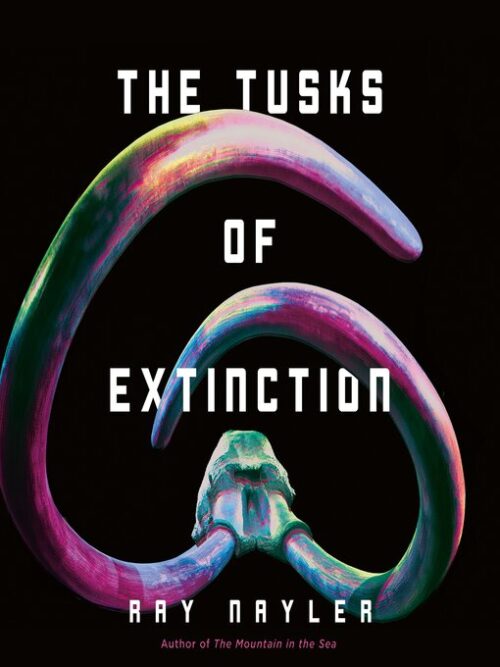
 Despair, hope, and the future of our world. Also, what does it mean to be a good parent? Big aspirations for a science fiction novella, but boy are they met.
Plot: Elephants are going extinct, yet for some reason, there are still scientists spending their lives studying them. Dr. Damira Khismatullina is one of these people. She has spent a lifetime learning about the habits of elephants in the wild, and protecting them from humanity. Unfortunately, humanity is actually quite good at eradicating things like elephants and the people who protect them. Indeed, while we watch Damira navigate a world that deifies her efforts while stymieing them, we also spend some time with a small group of poachers, as they try to sneak around the layers of protections Damira and people like her have put between them and their prize. Opportunities don’t grow on trees though, and a tusk might be the only chance they have out of poverty, for themselves and for their families. Shenanigans ensue.
I loved this thing so much. Unlike 99% of science fiction, the book does not centre the west as the natural cultural touchstone. Both Damira and the poachers we meet along the way are Russian. The centre of the world for them is Moscow, not New York. The characters too, felt built out of that culture. I find this particularly interesting because to me, these characters felt more familiar than a lot of characters I encounter in fiction, because I grew up with people like that. It meant that even though the book is short, and so necessarily you get very little time with the characters, they felt very real and three dimensional to me. Nayler, presumably deliberately, infused both our heroine and our antagonists with the same Eastern European fatalism that inexplicably sits comfortably right next to an absolute refusal to just lay down and die. It is such an elegant exploration of the ways in which similar people, with the same mentality, turn out vastly differently based on the opportunities they had. Of what it means to be human, to be sentient, to be yourself.
I raise this because having taken a look at the goodreads reviews, this is far from a universal perspective, so your mileage may vary.
It’s also funny, in parts, which was a huge relief, and inventive. The book positions future technology almost exclusively as a tool used to oppress dissenting voices and consolidate power, and yet despite the best efforts of the powerful people that run the world (and whom we never meet), people find novel, clever ways of using it to do good. And if that’s not a relevant message right now, I don’t know what is.
