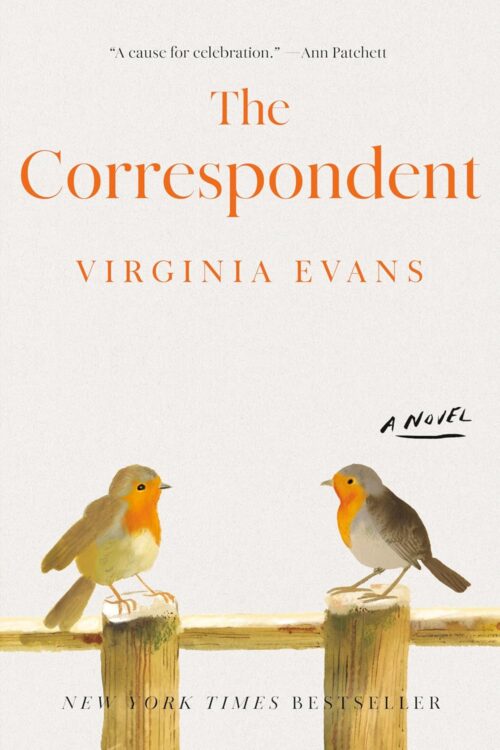
As suggested by the title, The Correspondent is presented as a collection of letters. Most of them are written by Sybil Van Antwerp, a retired lawyer and chief clerk for a federal judge. At the start of the book, Sybil is living alone, having divorced her husband years before. She has a contentious relationship with her daughter Fiona, an architect living in London. Sybil has been a lifelong proponent of letter-writing, and has kept up the practice to the annoyance of many of her friends and relations. Her letters are sent to a wide variety of people, including her best friend and former sister-in-law Rosalie, her brother in France, the struggling teenage son of a friend, and a bevy of famous writers including Ann Patchett, Larry McMurtry, and Joan Didion.
Though Sybil is a learned, erudite person, her letters also offer insight into her eccentricities, insecurities, and flaws. She is pushy, stubborn, and self-centered. Even when the reader is presented with her side of events, it’s not hard to understand why her daughter finds her hard to deal with. That is not, however, to say she is unlovable. Rather, Evans does a really remarkable job of turning Sybil into a real person for the reader. Even when she is being ridiculous or annoying, the reader is rooting for her to figure things out and make things better.
Because this is a novel, a remarkable number of things happen to Sybil over the course of the letters. Two new men enter her life, a boisterous former colleague enchanted with her mind and a kindly neighbor who helps her around the house. She intervenes in the life of a customer service agent whose boilerplate kindnesses she mistakes for real human interaction. She re-connects with people from various stages of her life, and makes life-altering discoveries about her own personal history.
All of this is underscored by two things the reader is aware of early one that most characters besides Sybil are not. The first is that she has been writing and re-writing a letter for years without sending it, confessing her innermost thoughts to a person whose identity is slowly revealed over the course of the novel. The second is that Sybil is losing her eyesight, and unsure what her life will be like once she is no longer able to do the things that she believes have given her life meaning, like writing letters.
Somehow, Evans manages to keep this genuinely life-affirming and not cloying. It’s a neat trick that not many pull off, in my estimation.
