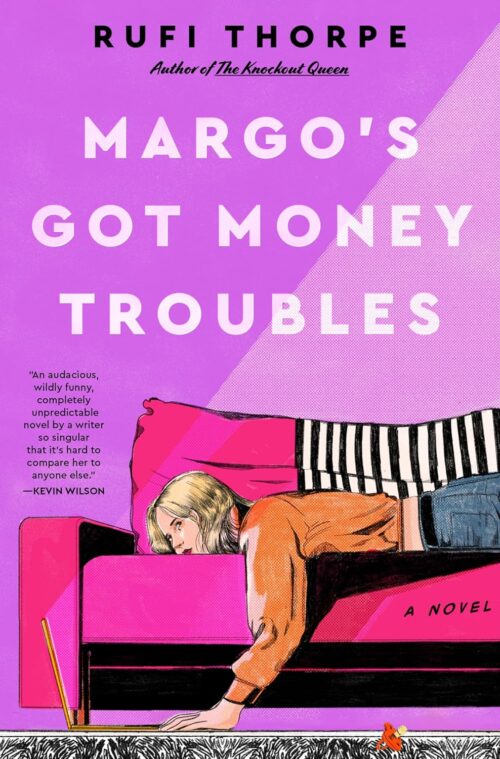
Margo is a 19-year-old community college student struggling to get by. Raised by a single mother, she waits tables to pay for school and the rent for the apartment she shares with three roommates. She’s also sleeping with her English professor. Margo is basically just drifting through life aimlessly until she finds out she is pregnant.
Her teacher/lover, her mother, her best friend and even her absentee father all assume she’ll be getting an abortion, but Margo resists. Frustratingly, the only reason Margo or the author Rufi Thorpe offer to explain her reluctance is that Margo doesn’t think it’s the kind of thing a “good person” would do. Margo is annoyed that none of her loved ones seem to understand her desire to be a good person, and seems to decide on keeping the baby at least partly out of stubbornness.
The novel skips past Margo’s pregnancy straight to the delivery of her son, Bodhi. Once the baby has arrived, Margo seems not to have considered at all how disruptive it would be to her life. She needs to keep waiting tables, but her mother refuses to watch Bodhi at all after the child screams bloody murder whenever Margo leaves him. Margo apparently never thought about day care, or babysitters, etc in the nine months of her pregnancy, and when she tries to bring Bodhi to work with her, she winds up fired.
Not thinking of things is a pattern for Margot, who incredulously is surprised that her roommates, still enrolled in college, don’t exactly love having a screaming infant keeping them up all night when they’ve got exams in the morning. I think Rufi Thorpe is trying to portray Margo as naive but charming, but instead she just seems thoughtless and selfish.
Eventually, desperate to make up the rent money caused by departed roommates, Margo takes two steps. She has her wayward, ex-pro wrestler father move in with her, and she starts an Only Fans account. Using tips from her father’s wrestling career and a friend’s cosplay habit, she creates a character, partners with other creators, and builds a huge subscriber base. But the money comes with a huge social cost, culminating with a battle to maintain custody of Bodhi on two separate fonts.
However righteously you might feel on Margo’s behalf, Thorpe’s portrayal of her naivete in this regard is enervating. The idea that an adult human woman could somehow exist in this world and not know that people would stigmatize her for doing sex work, defies belief.
I started listening to the audiobook of Margo’s Got Money Troubles because I saw it was narrated by Elle Fanning and was intrigued. I didn’t learn until I was halfway through that she is starring in an Apple TV adaptation of the novel. Fanning does a great job with her narration, but the existence of the adaptation made some things click into place for me. This book definitely gives the impression of being written in the hopes of it being turned into a miniseries. Another impression it gives? That Only Fans may have been a paid partner. Margo’s experience with the site itself is practically quaint, a best-case scenario that seems sanitized to a staggering extent.
