Bingo Square: Justice (there’s systemic oppression, a character unjustly punished for crime, ideas about legality vs morality)
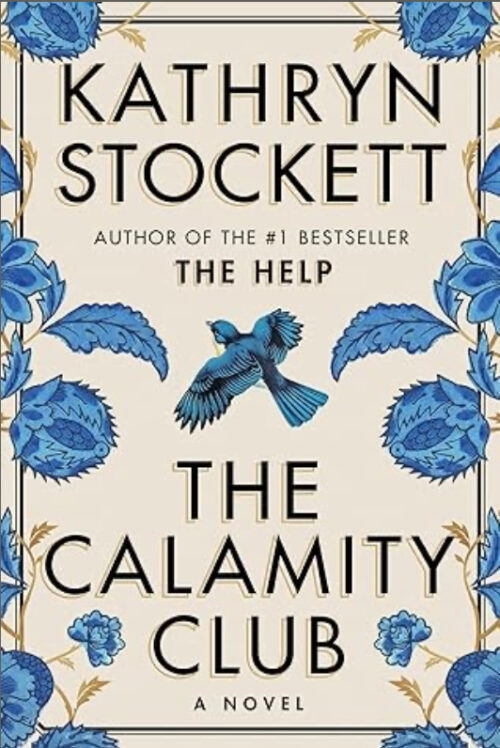
Southern Lit Book club is starting back up for the fall session and this was the first book. While I enjoyed The Help when it came out, I also think the later critiques were valid, and wasn’t exactly in a huge hurry for this one but book club was a nice excuse to read this. And it’s a bit of mixed reaction – it’s fine but I was hoping for more (for all the white savior concerns, there was also just something immensely readable about The Help).
It’s a novel that feels both overstuffed with too many things and too long, dragging in the middle. I also don’t want to complain about a happy ending, especially after my review of Land but something about the ending felt anticlimactic. Basically, there was all this narrative tension, and then it all kind of fizzled and everything worked out. Once again, I am glad it worked out but it felt like there should have been some type of fall out first from certain activities. It basically felt like we had a whole bunch of Chekhov’s guns that never went off.
And yet on the other hand, the villain of the story doesn’t really seem to get the comeuppance they deserve; they were thwarted in regards to one specific thing, there is a very small hint that there might be some negative consequences but it also doesn’t seem like there is going to be anything done to reverse the real harm she did more broadly. While she had a favorite scapegoat in the novel, the policies and programs she implemented have far reaching impact beyond that individual, but the novel focuses only on saving an individual rather than resolving the institutional and structural harm.
The novel spans three months, beginning in July 1933 and wrapping up at the end of September, and follows two POV characters, Meg, an 11 year old girl, and Birdie, a 24 year old woman. Meg has been at the orphanage in Oxford, MS for a year and a half; her best friend, Ava, recently turned 12 and was placed in a work program, leaving Meg behind where she is bullied by other kids, and mistreated and isolated by the head of the orphanage, Mrs. Pittman. While Meg believes she has been abandoned, when the novel gets into her backstory, there are some clues for the adult readers that there is more to it.
Birdie lives with her mom and grandmother in the family home on a farm in Mississippi; while the family was never well to do, they were stable before but now, a few years into the Depression, they are struggling and behind on their tax bill. In fact, the rich neighbors just lost their land for non-payment. Birdie’s little sister Frances is in Oxford, where she moved after finishing school and a rushed wedding. Since Frances hasn’t been responding to letters, Birdie takes a trip for a visit to Oxford to beg for money from Frances’s well-to-do husband, Rory.
Once Birdie arrives in Oxford, she realizes quickly that Frances has been a bit deceptive about her background with her new, wealthy family while the astute reader will quickly notice the hints that Birdie doesn’t know how to interpret regarding the family’s actual status. Birdie keeps extending her stay and joins Frances on her volunteer duties at the orphanage, crossing paths with Meg.
I’m not sure if this next part can even really be considered a spoiler since it’s so heavily telegraphed but it soon turns out that the family is broke so now Birdie has to find a way to save two family homes. This is the point where Charlie enters the story who has her own motivations to make money.
One of the big frustrations with this story is that it begins so many threads that ultimately don’t go anywhere. For example, Birdie is a bookkeeper and helps the orphanage gets its books in order for an inspection. There seemed to be hints of corruption and embezzlement but they don’t contribute to the novel’s resolution. Instead, sometime around the 60% mark, the novel ends up becoming the 1933 version of Risky Business. Granted, the prologue of the novel begins with Birdie buying 100 condoms so it isn’t out of nowhere but by the time we even get there in this 650 page novel, I had completely forgotten about it.
There’s also a whole subplot with former New York socialites who have been forced to return home to Mississippi with lots of references to F. Scott Fitzgerald, which does help create an immediate picture of what these people are like. It wasn’t uninteresting but it made the novel feel bloated because it just didn’t quite fit, and took time and attention away from the other parts. It’s like Stockett had ideas for two or three novels and tried to tie them all together but it weakened the story overall. At another point, there’s a love interest that explains he’s in the process of getting divorced and he actually is telling the truth. It just felt like such an odd detail to even have- why not have the character actually be divorced? Instead I spent the next two hundred pages waiting for the novel to reveal he was a lying asshole, only for him to be decent. When are guys in the process of getting divorced in literature ever actually in the process of getting divorced? It’s such a minor nitpick I know but it didn’t feel like subversion of expectations as much as it was building potential narrative drama, only for everything to be fine or fizzle out.
The novel worked best when it focused on the character relationships (or on them working together to overcome the villain) but it got distracted or diluted by trying to have too much. Within book club, many loved, some expressed similar issues to mine but we all generally agreed that the ending was abrupt/needed more, and even a short epilogue would have helped so much.
