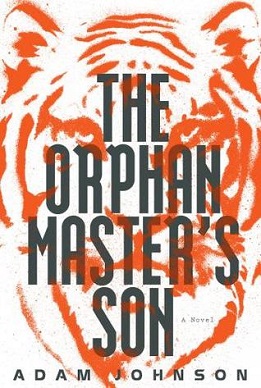
Over the years I’ve read several nonfiction accounts of life in North Korea, but I think The Orphan Master’s Son is the first fictional book I’ve read that takes place there. I’m not sure what to think of it.
Pak Jun Do is the titular character, raised in an orphanage that his father runs. His mother was an opera singer, but she’s gone–whether kidnapped to Pyongyang, in a prison camp, or dead–he doesn’t know. When he’s a teenager, the boys at the orphanage are conscripted into the army and Jun Do learns tunnel-fighting and becomes good enough at it that other doors open for him. I can’t share too much more about the plot without giving a lot away, but interspersed among the chapters are sections that are narrated by the loudspeaker that runs through all North Koreans’ homes, constantly spreading propaganda (at least, people outside of North Korea think that’s the case, but how could we ever know for sure?). These loudspeaker chapters were maybe the most fascinating part of the book, as they illustrate more about daily life in North Korea but also the power of propaganda. These chapters also help to emphasize Adam Johnson’s point about truth and belief. The whole book is about what’s true vs. what we believe, and whether our beliefs make something true, if it’s true for us. It’s thought-provoking.
To be honest, I didn’t like this book (but I don’t like most literary fiction), but that doesn’t mean it wasn’t good. I was fascinated by it, but it’s dark and depressing and also gross. It took me a long time to read the first half of this book, but I moved through the second half quickly and found myself enjoying it more. Although, I’m not sure “enjoy” is the right word. I think maybe a better word is “gripping.” I needed to know what was going to happen, and I was concerned about the characters, but I wasn’t really having a pleasant reading experience.
I’m glad I read it, but I don’t think I’ll ever want to read it again.
