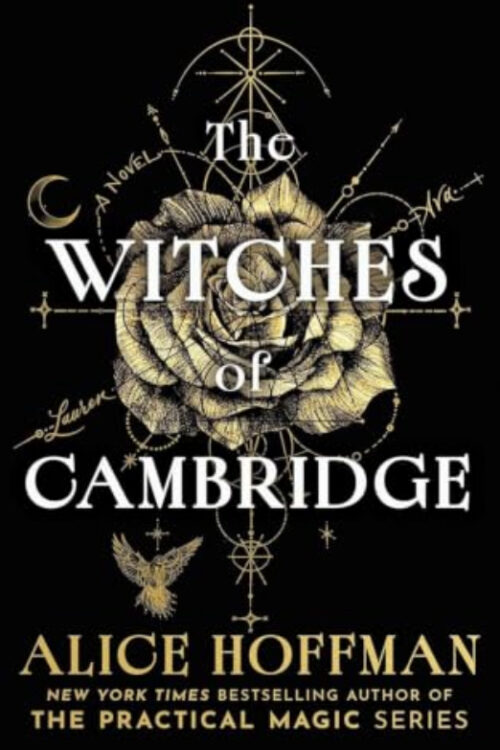
 Bingo Square: Craft (witchcraft)
I wasn’t excited when my book club picked this one but I figured, maybe it was time for me to give Alice Hoffman another try. I think the book I had read was The Third Angel and it just didn’t work for me.
I would like to think I gave this novel a fair shot but Hoffman just isn’t for me. It’s frustrating because there are moments in this book that are absolutely gorgeous and the premise sounds fascinating. Unfortunately, it was also incredibly boring, especially in the first half. Something about this novel felt very ethereal – just very dreamlike; the characters felt like sketches of characters and I don’t feel like the novel ever quite gave me enough to grasp onto (at one point, during a less forgiving mood, I described it as vibes glued together by cliches and archetypes).
The novel is set in early 1950s Cambridge, and follows two young witches across their four years at Radcliffe. Lauren and her brother Lionel know their family history, have grown up with it, and Lauren has been expecting her invitation to Lilith House, even if she is interested in pursuing and studying black magic unlike most of the other practitioners. Ava has been raised by a very conservative family, disconnected from her roots, and all the witchcraft and their history is a new discovery to her. Together, Ava and Lauren are the two new pledges of their year, invited because their heritage traces back to the first witches of Cambridge.
Interspersed with the 1950s timeline are letters from the first witch of Cambridge, documenting her life and interactions with the Mathers family and witch hunters of the late 17th century. This part felt a bit more substantial and grounded but there were also some moments I struggled with, like when a witch hunter in the 1690s said, “your body, my choice.” That’s just a bit too referential to 2025 for me and too meta.
There were a few too many moments like that – I actually didn’t love the lore for the witches in this one (they bleed black blood, have sharp teeth, 11 fingers and they can’t dive under water); the fact that they are the descendants of Lilith felt like another way of saying, “we are the daughters of the witches you didn’t burn”: a statement that may have sounded profound at first but now feels like a cliche. And while, of course, I enjoyed that the witches and magic were real, having it so linked to lineage and bloodlines was frustrating. I would prefer a world/system where anyone could choose to be a witch.
The book was also severely lacking in detail when it came to community among the women. Lauren and Ava are best friends because they are the two witches of their year but what were they doing? We don’t see them interacting, we didn’t even find out all the names of the six other members of Lilith House, we didn’t see them practice together, and why was Lilith House so small and limited in admittance? Another witch is introduced but she is snubbed by Lilith House because she doesn’t have the right background. I couldn’t even tell you what Ava’s major or course of study was.
All this potential sisterhood and academia falls to the wayside to focus on love stories and love interests. In fact, the men in the novel felt more developed than the women, especially Ava. There are some interesting common threads across the generations about the nature of love but to be honest, it felt like Practical Magic with all the women doomed to fleeting love affairs.
There are also so many plotlines and comments that don’t go anywhere. The novel keeps reminding the reader it’s set during the time of McCarthyism but it doesn’t really have any impact on the characters. There is another plotline that is kind of barely there in the background but the eventual resolution is also so obvious. All it does is show just how much this novel relies on not having the women actually talk to each other or form a community, even when there are only eight of them.
The final third of the novel pulled it together enough for me to give this 3 stars rather than lower but this isn’t one I’d recommend.
