 CW: racism, obviously, but also pre-Roe-era abortion, including bad outcomes (offscreen)
What is it with books about ambivalent/absent mothers and the impact on the (female) child? I feel like I’m being hit over the head with a lesson that I don’t particular need!
I found this book almost impossible to put down–I had an evening to myself to do errands that needed doing, and instead found myself lying on the couch running through this as fast as I could.
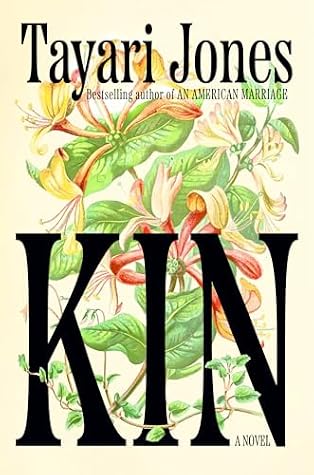
Kin traces the parallel but connected lives of Annie and Vernice (Niecy), two motherless orphans (metaphorically and literally) from Honeysuckle, Louisiana. Annie is given to her weary grandmother, who has already raised and buried numerous children and grandchildren, after her mother Hattie Lee skips town and leaves her behind (her father is unknown). Niecy, on the other hand, is raised by her happily childfree aunt, who essentially is trapped by the town into staying and taking care of her after her abusive father kills her mother and then himself. While they largely see themselves as two sides of the same coin–longing for maternal love–where they look for it drives them temporarily and then irrevocably apart.
Niecy receives admission into Spelman, where she attempts to find sisterhood and belonging amongst the Black elite. Meanwhile, after receiving news of her mother’s whereabouts, Annie runs away from home with three other kids from town (Clyde whom she thought she was going to date, Babydoll who Clyde has been dating, and Clyde’s cousin Bobo) to try and get to Memphis where her mother might be living.
The book flips back and forth between Niecy and Annie’s perspectives, and for a while it seems like the book will go that usual route of the two of them drifting apart, no longer cradle sisters but merely childhood friends. But that’s not what happens–Annie comes for Niecy’s wedding. They write letters to one another. Throughout it all, no one understands or cares for the the way they do each other, even when they don’t always share the full truth of what’s happening to them (Nicey is secretly bisexual, Annie is not handling being near her mother well). The entire book is infused with a tension that sinks into your bones, and it doesn’t let up. I was on the train reading a section where Niecy accidentally sits in the whites section of a cross country bus and is harassed and physically thrown off by the bus driver when I realized that I had to get off at the next stop. When I did, I instinctively curled into myself, protecting my belongings, because for a second I was Nicey, and I had been hustled off the train, and I didn’t want to get in trouble.
Overall, this is a beautiful work about family we choose as opposed to family we’re born into, and the enduring power of female friendship etc etc. No wonder I loved it so.
