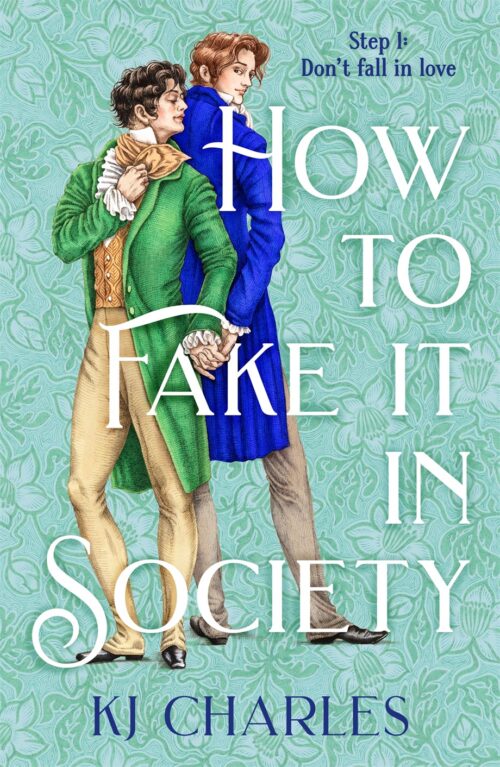
 KJ Charles is definitely an auto buy (well, an auto hold) author for me (actually, I just bought actual physical copies of the Will Darling books so maybe this will become auto buy as well). Something about the way she writes consent and romances with legitimate, interesting plot works for me (not even being sarcastic). I enjoy that they tend to be sort of oldtimey as well, which allows for a bit of disengagement with the current trashfiredumpster that is the world. Every one of her books allows for a little escape.
I find myself thinking too that as prolific as she is, there is a real sense of novelty and creativity in each of her works. Sure, I have very recently giggled about how there’s a standard coupling in all of her books–one openly queer, loosey goosey and one upright more closeted–
wait a second that’s ALSO this book ahah
Guess what I don’t care!!
Our plot kicks off with Titus Pilcrow, he of the interesting name, a paint maker who, upon delivering some pigments to a wealthy customer, finds her near death’s door and in need of a man to marry to prevent her fortune from being inherited by her cartoonishly evil nephew who might also have murdered her. Titus is like…okay? And all would be well and dandy except that Nicolas-Marc, Comte de Valois de La Motte (Nico) had been ready and willing to step in and also, sort of, was really depending on the money coming in to get his sibling out of a tight spot.
That particular phrasing indicates my biggest gripe with this entire novel. Setting aside the fact that Nico is the son of a notorious (and real) jewel thief who made off with a necklace belonging to Marie Antoinette–which is the sort of red herring fact that doesn’t actually matter all that much in the grand scheme of things–everything Nico does is in service of his frankly annoying sibling Eve, who got Eve* into a pickle by trying to do a crime with a guaranteed payout, failed, and now owes money to some bad people. And made it Nico’s problem. I know we’re supposed to see Nico’s willingness to help his sibling as evidence of his good nature, but all I felt was that he was enabling Eve’s foolishness and that Eve was not really doing much to help the situation.
*Eve is best known as Eve. ‘He’ will suffice when needed.
Other than that irksome tidbit, the rest of the novel is incredibly lush, like the paints that Titus loves so much. Given how much is made of his expertise in pigments, obviously it’ll come in use in the grand conflict resolution, which honestly I very much enjoyed. Who put a delightful heist caper in my cup of romance??? Not that I’m complaining.
