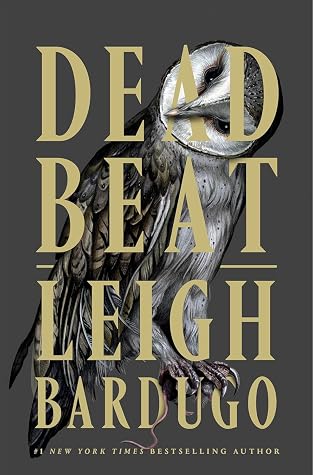
 This is another book that’s probably not reaaaaally a four but I’m willing to let it slide because, you know, last in a trilogy, I did force my eyes to stay open to read it because I was engaged, etc. Luckily when I woke up this morning the friend who’d originally recommended this series what feels like a billion years ago had also finished it overnight, and so I got a chance to work out some of my Feelings about the book with her and can now write this in a much more succinct fashion…unlike Bardugo, who clearly just threw this at her editor and said IT’S DONE TAKE IT I DON’T WANT TO SEE IT ANYMORE.
Note that this is the review of a third book in a trilogy, here be spoilers for the first two and some mild ones for this book as well, although I’ll spoiler tag anything that genuinely made, the Lord Queen of Gullible, gasp.
Plot wise, I had forgotten nearly everything of detail that happened in the past two books, although remembered in broad strokes some of the more important bits (I thought this was enough, but I did crack and read two detailed summaries of the two prior books, and in chatting feel like that might have helped my enjoyment). Alex Stern is a Dante, part of the ninth house at Yale that polices the other eight houses when they do arcane rituals for capitalism powers (e.g., spells for youth or luck or ensuring someone gets their VC funding). She’s special, not entirely in the Romantasy way but not not that (especially after this book). She can see Grays (the word used here for ghosts) (recall that fantasy books must use a weird term for a normal thing) without having to use a toxic potion to do so, which renders her quite a good fit for Lethe house. However, since entering Yale things have gone from bad to worse. Darlington, her Virgil–the older student who was formerly Dante and serves as her mentor–accidentally ended up in Hell and came back half-demon (but no less sexy and into her and vice versa). A number of powerful people in charge have turned out to be secretly evil (gasp). Her messy prior life came back and tried to ruin her current life, so more people had to die. And yeah, people are dying and it’s not entirely clear who’s responsible: the evil societies, the evil vampires, the evil demons, the evil administration, etc etc etc. But the main issue is that there’s a gaping door to Hell that’s been jarred open, letting in demons, and it’s definitely Alex’s fault.
Look, I did stay up late reading this. I have given this four stars and I’ll stand by it. BUT there were way too many plot points in this book, and so many Big Reveals that at the end of the day nothing felt like a Big Reveal. We’ve known for two whole books that Alex Doesn’t Know Her Father and ofc that means that she’ll have to meet her father but she spends half the book not doing that because just…doesn’t want to. Never mind that demons are roaming free and murdering people and causing chaos. And then when her father does show up (again, not a spoiler per se because you KNOW it’s going to happen, just a question of when) he does so with an entire exposition: he’s actually part of x order or the Bene Gesserit and he’s got the Amulet of Amon Hen which will allow Alex walk the Witch’s Road and slay the Magisterium. The main plot and its many many offshoots feel unplotted, and honestly it all sort of washed over me as I raced to figure out what the mystery solution actually was.
The parts that rang true, then, and saved the pacing were all the little shocks and moments of levity. Tripp being the best worst demon, always ready to help despite being, you know, a demon/vampire/posh kid (which is the worst, hard to tell). The unintended hilarity of Alex telling her dad, “maybe just get a vasectomy if your genes can produce beings of problematic magical power.” [Golgamoth (or however you spell it) called Darlington as his second before Alex could]. Dawes finally saying she’s done but meaning she’s finished her dissertation. It’s been ages and ages with these characters (seriously these books are longish and also it’s been years) and even if they are written a bit more 2D in this go around, it’s easy enough to fill in with characterization that we’ve had in the past.
In short, if someone asked me for a dark academia book that wrestles with privilege and social inequality and fancy schools and nexuses, I’d recommend the Scholomance series. But after that, I’d definitely recommend these books.
