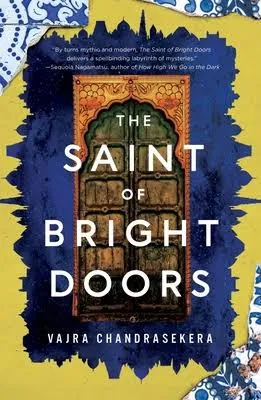
Fetter was raised to be a weapon. From a young age, his mother has groomed him to one day assassinate his father, the messianic cult leader known as The Perfect and Kind. She even severed Fetter’s shadow, rendering him practically weightless. As a teenager, Fetter decides he doesn’t want to be a weapon and heads to the city of Luriat to live an unassuming life. However, he isn’t able to avoid upheaval for long. He attends a support group for failed Chosen Ones (they’re fairly common in this world), and ends up recruited into a revolutionary movement. Shortly thereafter, a crowdfunding email alerts him that The Perfect and Kind may soon be coming to Luriat. As much as Fetter wants to hide out, read books, and spend time with his boyfriend, he is forced to reckon with his history, and to choose how he will move forward.
This book was very strange. This is a fantasy world where someone can lose their shadow and godlike figures can alter reality on a whim, but also dating apps and spam emails and talk therapy all exist. It is dense with symbolism, most of which I did not have the context to understand. The author is Sri Lankan and I think a lot of the scenarios were supposed to satirize real-life events there, but I don’t know enough about Sri Lankan culture or history to understand the context. Still, this was a beautifully written story in a delightfully weird fantasy world.
CBR18 Bingo: Or, because Fetter is trying to find an alternative to the life he was indoctrinated into as a child.
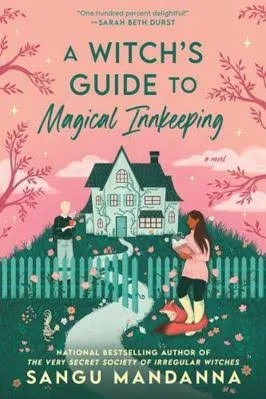
Sera was once the most promising witch of her generation, but when a resurrection spell goes awry, her powers are almost completely depleted and she is exiled from the magical community. Years later, Sera is running the charming Batty Hole Inn, with the help of her aunt and a chaotic, lovable found family. She comes across an ancient spell that might be the key to restoring her power, and shortly thereafter meets Luke Larsen, a magic historian who might be the only one able to translate the spell for her. Luke is curmudgeonly and handsome, and has an adorable younger sister named Poppy. As Luke and Sera work together on the spell, their feelings for each other start to grow into something more than a collegial relationship.
I really liked this book! It was cozy and sweet, and the slow-burn relationship was really satisfying. I loved all of the colorful side characters. I will say, if you have read Sangu Mandanna’s “The Very Secret Society of Irregular Witches,” this is very similar. But that also means if you liked that book, you’ll probably like this one as well. It’s fairly predictable, but in a comforting way.
CBR18 Bingo: Refuge, because the inn serves as a magical refuge for all who need it.
I read this one for my book club, and probably would not have chosen it on my own. The dust jacket claimed it had been praised by a number of celebrities, including Oprah and Joe Rogan, which gave me pause. I did end up liking it more than I expected to, though I didn’t agree with every conclusion the author made and found his reasoning sloppy in some parts.
Hari’s thesis is that our collective ability to focus has deteriorated over the past few years, but rather than being an individual moral failing, this lack of attention has systemic causes and requires systemic solutions. He identifies fourteen causes of this focus crisis, and presents solutions to them. Of these causes, the one I found most compelling was “Cause Six: The Rise of Technology that Can Track and Manipulate You.” Hari interviews several former and current Silicon Valley luminaries, who reveal the nefarious intent behind some of our favorite social media apps. It’s a chilling look at surveillance capitalism and the amount of psychological damage can be inflicted when these corporations are allowed to run free and unregulated. Honestly, if he had gone deeper on this specific topic and dedicated the whole book to it, I probably would be a lot more enthusiastic about the book in general.
Where I struggled with this book was when Hari gets to the chapter about ADHD. He does this “just asking questions” thing that manages to bring up all the talking points of people who don’t believe ADHD is real. He cites some alarming statistics about rising ADHD rates, sidestepping the theory that greater understanding of a disorder and better diagnostic tools will obviously lead to more kids being diagnosed. He questions the research on the heritability of ADHD and claims that it is an environmental problem casued by pollution and processed foods. He accuses parents and practitioners of “drugging” their children, and equates ADHD medication with meth. He dismisses the very idea of neurodivergence and of adult ADHD. He used several emotional anecdotes to make these claims, instead of presenting actual data. As someone well-acquainted with ADHD, I found this chapter dismissive, oversimplified, and unscientific.
The other chapters weren’t as bad, though they did have their share of scaremongering and “kids these days” rhetoric. I think some of Hari’s solutions are appealing (banning all forms of surveillance capitalism!) and some were less so (making it even more difficult for people with ADHD to access medication). Overall, this book had some interesting points, but mostly it just made me mad.
CBR18 Bingo: Repair, because Hari offers solutions to repair our damaged attention.
