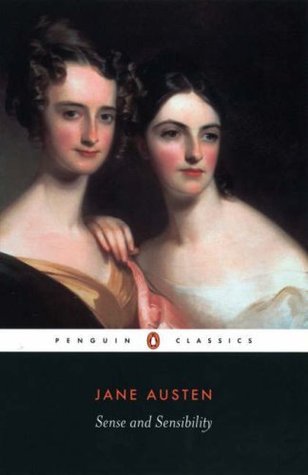
 CBR Bingo: One, for Austen’s first book!
Whilst watching the superlatively wonderful Emma Thompson/Ang Lee Sense and Sensibility on a very successful (if I say so myself) Book Group On Tour weekend in Bristol, it occured to me that I’d never read the actual novel on which it was based. Looking to rectify this, I procured this copy at a local bookstore and then proceeded to gnash my teeth over it for what feels like AGES but probably was only a week or so?
This was Austen’s first book, and I’m not afraid to say that yes you can actually tell. It feels very much like she had a number of interesting thoughts, tried them out, and then perfected them all to use in Pride and Prejudice. I think that Emma Thompson deserves a second Oscar, for Best Original Screenplay, because the movie is both a brilliant adaptation of a flawed source and essentially an entirely different story.
Will seize on two separate elements in lieu of recapping the story, which by this point you should all know (Marianne x Alan Rickman and Emma x fopsy mcfop Hugh Grant):
1) the relationship, or lack thereof, between Marianne and Elinor and their mother.
2) pages long mansplaining
So first: Austen decided to have a family of four women who all tolerate one another and treat each other with the polite courtesy owed a stranger. Elinor doesn’t want to ask Marianne what’s going on with Willoughby, and so she begs her mother to do so, and then the mother doesn’t want to do so for fear of impinging on Marianne’s privacy and making her feel compelled to tell her mama. And no one gives Margaret the time of day, because she is ‘young’ (which feels ridiculous to say when Marianne is, of course, 16).
This might work, and honestly might have been more realistic to the norms of the day, but Austen clearly realized that no one wants to read books about kindly familial strangers. We thrive on books featuring close relationships, all the more so those of the female persuasion (see: the Neopolitan novels, and their bizarre characterization as “female friendship”). It’s much better to see Elinor and Marianne as sisters with all that entails–their ups, their downs, their petty squabbles. And yes, even in the movie Elinor is hesitant to fully ask Marianne as to what’s going on, but it’s not from a sense of modesty but from Marianne’s utterly charming way of slithering out of the question when it’s asked and presenting a front of perfect serenity otherwise.
Second is, of course, the two (2!) pages-long explanatory monologues, first by Colonel Brandon and then by Willoughby, that attempt to paint their actions in flattering lights or explain what they were about or flat out provide some context for what’s going on. While they have differing levels of success (we’re predisposed to like Brandon, ofc, and say eff off to Willoughby), the bigger issue is that the plot tempo suffers during both. There’s way too much explaining of context (who knew that Brandon had a brother who was a layabout? I did not, and honestly I didn’t need to) before we get to the parts that matter to the story. I can only imagine poor Elinor’s eyes glazing over while she’s forced into another recitation of woes, grumbling to herself that Marianne should be forced to listen to these.
Both of these monologues feel like warm ups for the infinitely more successful letter–not in the least because said letter does not contain any repetition of those sentiments or renewal of those offers which were last night so disgusting to you…aka Mr. Darcy has learnt from Messrs Brandon and Willoughby, and gets to the point asap so that Elizabeth understands the point he’s trying to make. Also it’s a letter, so we get to read economy of speech as opposed to endless prevaricating and self-flagellation.
All in all–Austen’s place in the pantheon is well established so I don’t feel particularly mean in saying that this one deserves top billing in “the movie adaptation was better than the book.”
