 We all know the trend: young women deliberately turning their backs on the modern world and cosplaying the rural homesteading lifestyle, where they grow their own veggies, bake their own bread, butcher their own chickens and make their own clothing. The lifestyle is then perfectly captured on social media, with carefully curated pictures of blond children in gingham dresses and cowboy boots, and posts that are clearly political in nature masked as just-asking-questions. Comments on social media posts split themselves between admiration and vitriol, and allegations of child abuse in varying forms of severity follow inevitably.
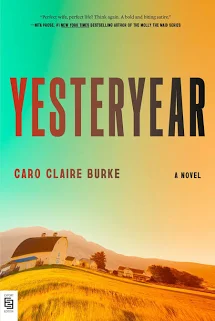
Such is the story of Natalie Heller Mills. Natalie grows up in what appears to be some sort of Mennonite-Mormon hybrid setting. She’s intelligent and hard-working and manages to get a scholarship to an Ivy League university, where she soon finds herself surrounded by girls who drink and have sex. Natalie looks upon them with disdain. Soon, she meets Caleb, son of a wealthy career politician, marries him and drops out. Though married life and motherhood are hardly how she expected them to be, she tries to make the best out of it. At first, her social media posts only get a dozen or so likes, but once she’s picked up by Manosphere podcasters, her stars begin to rise. Her ostensibly perfect life is suddenly interrupted when she finds herself waking up in the 1850s and finds out just how perfect her homesteading lifestyle is.
It’s a common problem: a killer idea for a book that just doesn’t pan out entirely. I did like this book, but it wasn’t as sharp of a social commentary as I imagined. Natalie is a deliberately horrible protagonist, but there’s nuance lacking here. Natalie is a victim of her community and her environment as much as anything, but it never makes her even a little sympathetic. That isn’t entirely problematic – I love a flawed protagonist; perfect people are boring – but it’s all very sharp and acerbic. The point that there is no warmth behind the glossy instagram pictures feels a little flat.
Natalie is also very good at reminder herself that America hates women, that women hate women, so anything negative that happens is born with a beatific grin as it confirms her worldview. Criticism is thusly disposed of; other people are simply jealous. The novel is also very good at portraying that particularly American brand of Conservative Republican Christianity: it’s very performative and hypocritical, but at the same time it’s par for the course. The novel doesn’t quite work as a satire – it’s not funny enough for that – but the social commentary falls a little flat, too. A lot of the plot focuses on solving both the mystery of how Natalie ends up in the 1850s, and charting her rise and eventual downfall. What I didn’t see coming is how the two are connected, and I’m not entirely sure how I felt about that conclusion.
Nevertheless, it’s an easy and engaging read in spite of its flaws. I just wish it would have been a little sharper, a little smarter, a little more layered.
