I don’t know how I ended up reading so many books about gay men this year (and I still have Song of Achilles on my TBR, so go figure) but by and large I’m enjoying myself, so whatever.
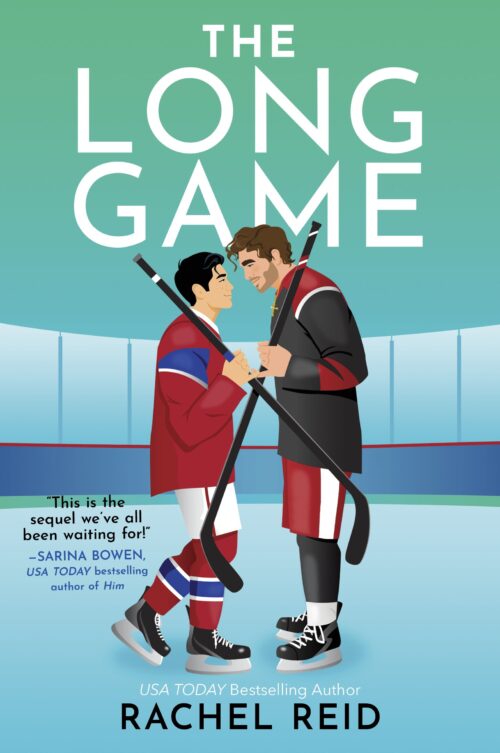 The Long Game (Rachel Reid) ***½
Shane and Ilya are back! Everyone’s favourite gay hockey players have moved from casual hookups to being in an actual, honest-to-God relationship – one that they still have to keep hidden from everyone because the media still pitches them as rivals. The book enhances their relationship a little: the feelgood-angle, by and large, is maintained, but we get a little more character depth this time, from Ilya suffering from depression and Shane not understanding what Ilya needs. It’s a lot lighter on sex than the first couple of books in the series, which I was actually happy about; I have no issues with smut, but it’s not where my primary interest lies. Instead, we see the pair do normal couple’s stuff and at the same time struggle to maintain open lines without showing the world they’re basically a married couple at this point.
The book also has something that most of the other books in the series lack: an honest to God antagonist. It’s a little less airy than Heated Rivalry, which is great on the one hand but on the other hand: I’m not sure Reid is the author to tackle this.
I get that this is not a fair comparison, but when I was reading this one I couldn’t help but think about Alan Hollinghurst, who also writes about the struggles of gay men, and though I enjoyed The Long Game I do wonder what an author with a bit more gravitas would do to the subject of gay men in professional sports. And yeah, I understand that that’s not Reid’s demographic or her objection, but it’s something I’d personally like to see. And I did appreciate that more serious themes were tackled.
I listened to this book in audio format, and though the narrator to this one was a lot better than the one who did Heated Rivalry, I don’t think it’s the proper format for me.
I recently watched the Heated Rivalry TV show – because if you’re on a binge, why not go all the way – and I have to say that I was surprised how much of the script came from the novel verbatim, because the show felt so much more mature. And yeah, Connor Storrie and Hudson Williams do a lot of the heavy lifting there in selling me on things that seem stilted or ludicrous on the page. I wonder how they’ll fare in season two (I know it’s a fan favourite but emphatically I was not sold on the kids’ wedding scene) but so far, I think it’s one of those rare cases of the adaptation outrunning the source material. But who knows?
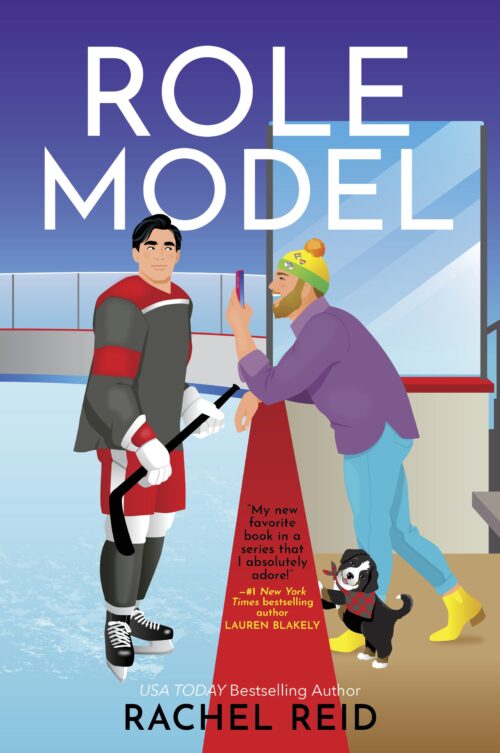 Role Model (Rachel Reid) ****
Hockey player Troy Barrett ends up in a fight with his fellow hockey player bestie over the friend’s sexual abuse allegations and rather than having these allegations investigated, is traded to the worst team in the league. He hates it, and he hates everyone. On top of that, his secret boyfriend has dumped him, came out of the closet, and has gotten engaged to a gorgeous man. Troy is stuck in a dull city where he doesn’t know anyone and is absolutely miserable, but then he meets Harris, his team’s social media manager. Harris is both figuratively and literally a ray of fucking sunshine, and Troy is immediately smitten. But what if other people find out?
I think I preferred Role Model to The Long Game because it doesn’t really try to tackle the heavy themes so much; I don’t mind heavy themes, but I don’t think this series is really the place for them. It’s popcorn: uncomplicated and airy but so, so satisfying. The thing with most of these books is that we keep expecting something bad to happen, but by and large, nothing does. People come out of the closet and the response of those near them is generally supportive, and the ones who aren’t supportive aren’t people the characters want in their lives anyway. Love is reciprocated, sexuality is compatible. It’s sweet and warming, if not particularly nourishing. That’s okay; not everything has to be high art. I also kind of like that the entire thing is basically a network at this point, where characters from previous novels show up (Ilya, Troy’s new team captain, features prominently and is delightfully unhinged) and we get this increasingly large web of gay hockey players standing up against bigotry together. It’s cute, if not exactly realistic.
It helped that I really did like Troy and Harris together; the grouch and the little ray of sunshine that thaws his frozen heart. It was cute without being cloying, and I bought it, which I didn’t always do in other novels from the series). My inner snob doesn’t really like these books, I suppose (there’s nothing like being an English major to suck the joy out of reading), but I can read them in a day and enjoy the hell out of myself.
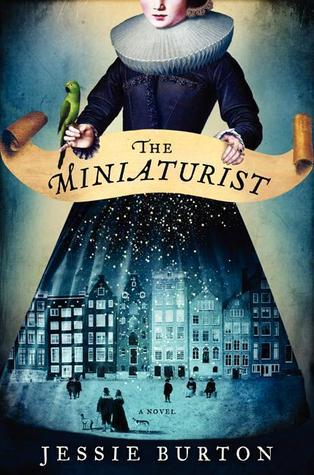 The Miniaturist (Jessie Burton) **
BEWARE – MAJOR SPOILERS
It’s the 17th century, and eighteen year old Nella Oortmans has just married a wealthy merchant name Johannes Brandt. She is now the mistress of a large household in Amsterdam, but has to contend with her secretive sister in law Marin and a remarkably distant husband, who gives her a rather odd wedding gift: a miniature version of the house. Soon, mysterious parcels arrive: dolls and objects to fill the empty miniature house, that seem to have an uncanny predilection to predict the future.
My issue with this book was very simple: I didn’t give a fuck about the miniatures. They were a distraction in what could have been a pretty decent book about a young, naive girl thrust into a world she doesn’t understand. Instead, we get vague hints and two disjointed stories that never really seem to click. There’s also the issue that Nella is much more of a 21st century Gen Z-er and not nearly enough of a naive 17th century countrygirl. Showing growth is one thing, but this is simply implausible.
Because of course, it doesn’t take Nella long to figure out that her husband lacks interest in her because he would rather be with other men. The bond they develop in spite of that is actually kind of touching, and the machinations behind the story – Johannes’ competitors weaponising his homosexuality, the chokehold of Dutch calvinism, Johannes’ show trial – are far more interesting. It runs into the same problem that I had with The Long Game in that I wondered how other authors would have dealt with that story, except I think that The Long Game doesn’t try to ascend its genre; this book tries to and fails. By the end I didn’t give a toss about the stupid miniatures, and even without that the plot was a convoluted mess full of gotchas and twists that don’t really work. The ending is a major downer. I could have been good, but instead it’s tepid and jumbled.
