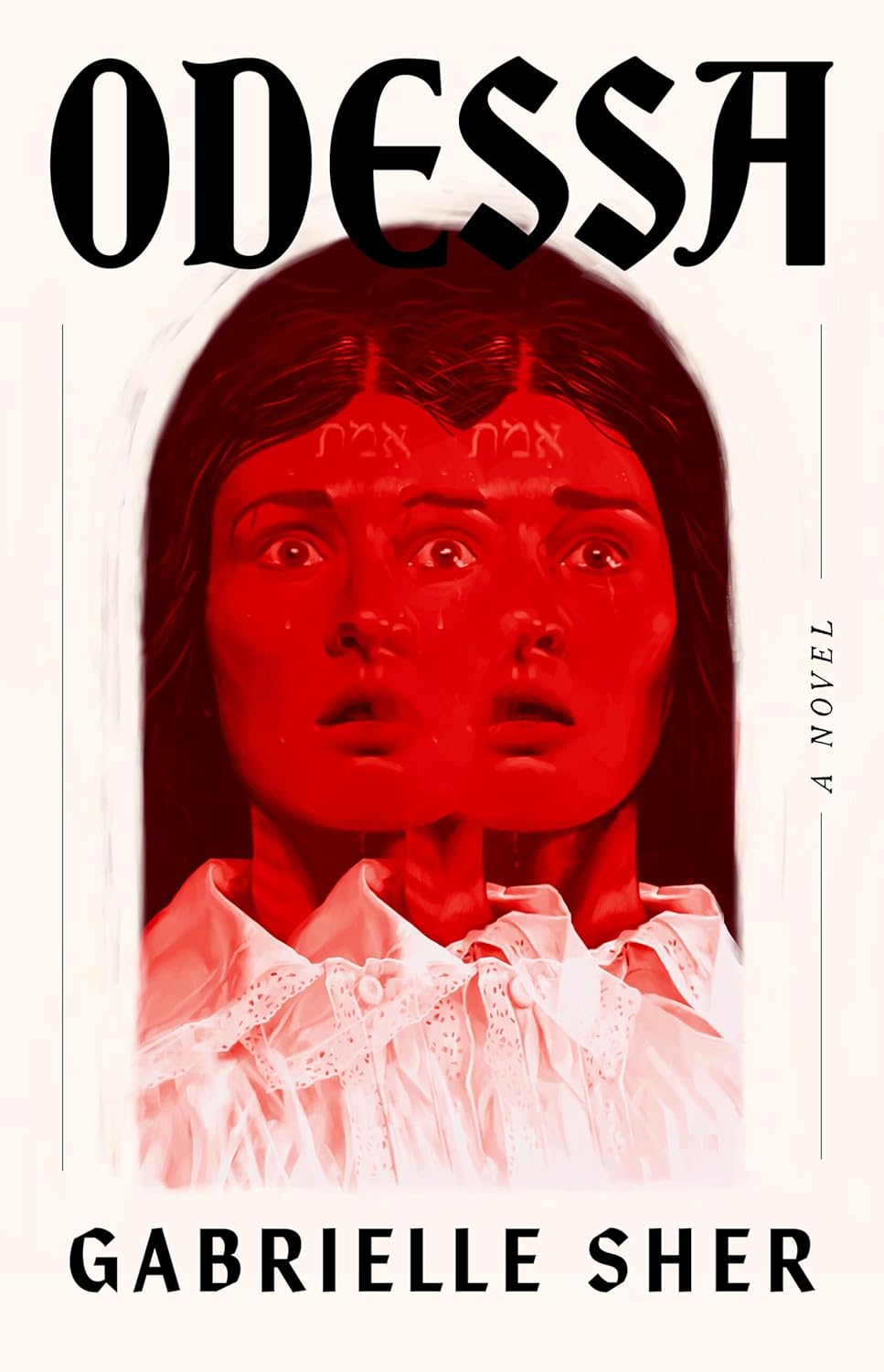
Gabrielle Sher’s Odessa started from her doctoral dissertation titled “Who Made Us Monsters? Narrative Psychology and The Female Jewish Gothic.” I assume it evolved a lot to go from academic writing to horror novel, but I think the question was answered.
The book doesn’t explain much. It doesn’t have a historic context note, there are no explanations or translations for the many words that I believe are Yiddish.
This works because Sher is very good at giving you enough context to figure. For example, you understand the setting of the novel if you already knew about pogroms. And if you didn’t, the book tells you very clearly that the shtetl in 1905 in Odessa is not safe.
Frieda is the mother and wife of the story. Her family survived at least two massacres. Her husband is keeping secrets. Her daughter is fighting Cossacks at night (and also keeping secrets). Her son is too young to participate in either. She just wants her family to live happily and safely.
Yetta is the daughter. She’s a normal teenager and she’s confused. She doesn’t remember Cossacks massacring her shtetl and now she has super strength. Her father said she hid and forgot everything as a defense mechanism, then God made her strong. So she fights for her family and community.
What happened to Yetta isn’t a mystery to the reader. A lot of the plot is shown through Mordechai, the story’s husband and father. I liked Mordechai, but he made mistakes. When Yetta is killed, he sloppily resurrects her as a golem to protect the shtetl. But there are other issues with half of a teenage girl’s soul in a golem.
I read the epilogue twice as I read the book, otherwise I would have rushed to find out what happens. I knew the last line was coming. But it felt different after reading every single word on the way there. In a good way. It’s a good book.
