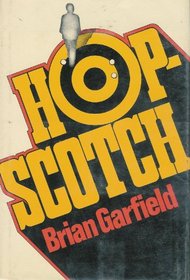
 A few weeks ago I wrote about how delighted I am when I read the source material for a beloved movie and it turns out that the movie was a fantastic adaptation of a fantastic novel. I had a less rewarding experience with Hopscotch, which is rather a dull but light spy thriller written in 1975 and adapted into a charming (if dated) comedy action film starring Walter Matthau in 1980.
The novel is about CIA field agent Miles Kendig, who is being forced into retirement by the Agency. Reluctant to go quietly, Kendig decides to write an exposé that will be embarrassing not only to the U.S. government, but to their allies and enemies as well. He mails chapters piecemeal to the CIA and foreign government agencies, setting off a game of cat-and-mouse as the CIA and other interested parties (most notably, the KGB) try to stop him. Is Kendig out for revenge, is he after suicide-by-Agency, or is he just having fun? It’s somewhat ambiguous in the early chapters, though someone who knows Kendig well claims, “He says he wants revenge because he got canned but that’s not it. He’s like a bicycle, when it stops moving it falls down. He’s rolling again, that’s all. There’s no point to it beyond the movement itself.” Brian Garfield, who was disappointed in the film adaptation of Death Wish for the way it glorified violence and vigilantism (which was not the message he intended) wanted to write a spy novel where nobody was killed. The story has a solid premise, and it’s a fairly light read; unfortunately, after the first third, I really struggled to finish.
To be fair, spy novels are not my jam. I read it only because I had seen the movie so many times, being my husband’s favorite film (big Walter Matthau fan over here), and I was curious. While the overall plot line is the same, the movie has so much more going for it. It’s got Kendig traveling across actual European border checkpoints (a quaint notion today). It’s got a score generously enhanced by Mozart and Rossini. Most significantly, in a role that’s completely absent from the novel, it’s got a whip-smart Glenda Jackson, whose speech about wine is perfection (“As a general rule, the older wines are better. It takes time for the elements in wine to resolve themselves into an harmonious whole.”). The introduction of a strong female character could have helped this novel immensely; there’s a female pilot that has potential, but even she gets a makeover for the better in the film. Well, 1975, what can I say?
This is a case where the genre just didn’t suit me, so take my rating (2.5 stars) with that in mind. Hopscotch won the 1976 Edgar Award for Best Novel, so if you enjoy espionage this might be for you.
