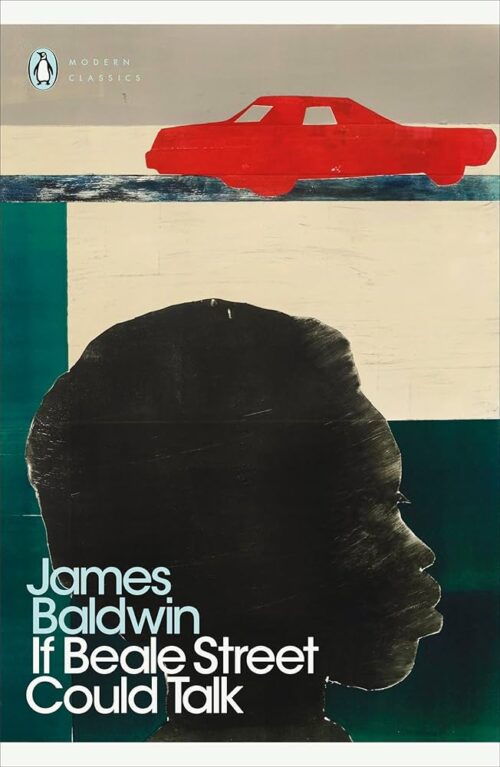
It has been over 50 years since James Baldwin penned this powerful fiction, yet very little seems to have changed. If Beale Street Could Talk straddles genres: it is a tender love story between Tish and Fonny, a slice-of-life drama of the 1970s New York Black experience, and a tense courtroom procedural. While some cultural references have aged, the catalyst—Fonny’s false arrest by a cop who takes personal offense at his existence—remains as common today as it was then.
Baldwin’s prose lifts these characters far beyond common tropes, granting them rich interior lives and complex backstories. His background as an essayist, activist, and poet, are all present in the page. This creates a musical rhythm that hums through the text, giving the narrative a soulful, jazz-like cadence.
The novel subverts traditional American literary structures. While the primary plot follows Tish’s pregnancy and the families’ desperate attempts to free Fonny, the “courtroom drama” serves as an autopsy of systemic racism. Racism here is a living, breathing monster, lurking around every corner. While some readers find the ending frustratingly inconclusive, I’d argue that a “resolution” would miss the point. Despite his innocence, Fonny can never truly escape the structural snares of society; his only genuine liberation is found in the act of sculpting.
It isn’t all bleak, however. Through flashbacks, Baldwin allows us to witness the intimacy and warmth of Tish and Fonny’s romance, reminding us that the tragedy is so profound only because the love between them is both grounded and touching.
