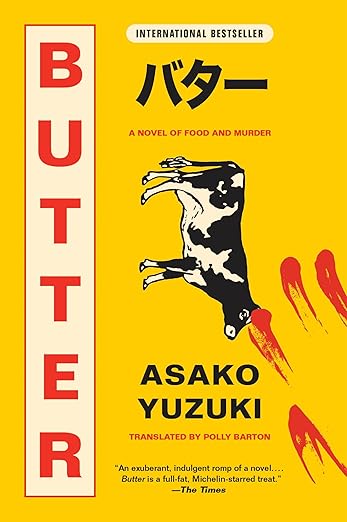
 I learned about this book and its author from a recent Guardian interview. In it, Asako Yuzuki reveals that when she wrote both Butter and her novel Hooked, (English translation due out this month), she was very angry, especially about sexism and fat shaming in Japan. While Yuzuki’s books have been very popular in Japan and around the world, they have also been criticized in Japan for being too feminist. I found this novel to be a real eye opener. While I had been aware that Japanese society can be quite conservative and restrictive for women, I was not aware of the depths of the sexism and anti-feminist sentiment there, or of the fat-phobia.
The fictional events of Butter are based on a real case that rocked Japan in 2009. Several men, on separate occasions, were found dead and might have been written off as suicides or accidents except they had one factor in common — all three men had been dating the same woman. In Butter, that woman is Manako Kajii, and when the novel starts, she is already in jail, awaiting appeal. Much like in the real 2009 case, Kajii seems to have been convicted of the murders based on circumstantial evidence. Kajii and the men she dated participated in the “marriage market,” which operates unofficially as a way for lonely men to hook up with women. The men that Kajii was involved with tended to be older and wealthy. The deaths of these men might not have elicited much media attention if not for Kajii’s appearance and her demeanor. By public standards, Kajii was deemed “fat” and “ugly,” and even more offensive was the fact that she was not ashamed of her looks. If anything, she came across as proud and dismissive of those who criticized her. Kajii is also a gourmand, and while she dated, she kept a detailed blog about a cooking class she took and the dishes she made and consumed. To the general public, it seemed obvious that such an odd woman, caring nothing for social norms and feeling no shame about being an outlier, must be guilty of murder.
Rika is a 30-something researcher/journalist for a weekly magazine in Tokyo. As the date for Kajii’s appeal approaches, she decides she wants to try to interview Kajii and figure out what really happened to the three men she had dated. Rika is well aware of society’s harsh views of women who don’t follow traditional roles and how stifling these strictures are. She experiences it herself, and she is not as convinced of Kajii’s guilt as most people seem to be. Rika starts writing to Kajii and visiting her at the detention center, but Kajii makes Rika jump through some strange hoops if she wants to get to know her. Kajii seems creepily good at reading people and identifying their weaknesses and insecurities. She gets Rika to do all sorts of unusual things which have to do with food, cooking, and her relationships with her boyfriend and with Reiko, her best friend since school. These food-related quests force Rika to confront her feelings about her parents, societal expectations about women, her own desires, and her feelings about her own body. But is Kajii helping her or using her for her own amusement?
I have to be honest — in the first half of the book, there were times when I felt like maybe I was in over my head. Sometimes it seemed as if Rika and Kajii were playing games of double reverse psychology with each other, and the references to a Japanese children’s tale didn’t make sense to me. But I’m glad I stuck with it because there are so many interesting relationships, especially amongst women, and Yuzuki does a wonderful job showing their complexity. I also very much liked the way Yuzuki ended her story. This would be a good choice for a book group.
