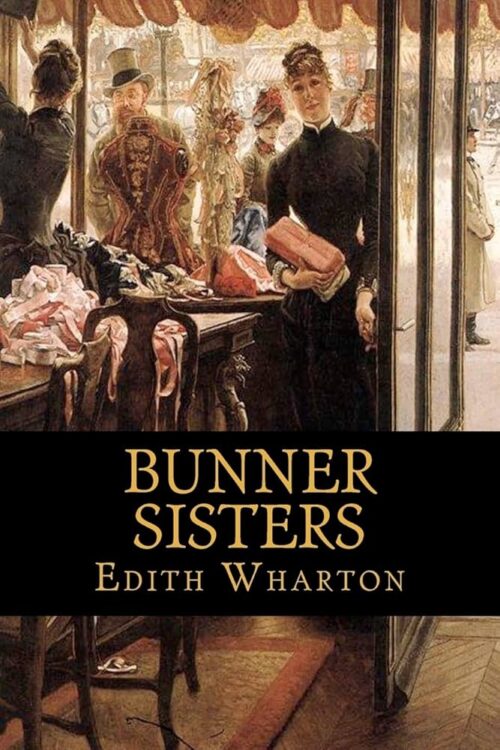
 Gosh guys I was hoping for a lighthearted read after my recent string of apocalyptic tear-jerkers, but this… was not that.
The titular Bunner Sisters are middle-aged spinster sisters in early 1900 New York City. They own a millinery/dress shop, appropriately called “Bunner Sisters” and take care of each other in a pleasant, if dull, routine. Ann Eliza buys a clock for her little sister Evelina for her birthday. The gift of the clock sets them down a path that ends (spoiler?) in what can only be described as devastation.
SUPER SPOILER SUMMARY: The clock seller, a lonely middle aged German immigrant called Mr. Ramy, claimed he used to be in a “head” position in the clock department at Tiffany’s; the sisters are intrigued by him and begin socializing in a very demure and proper way, along with their gossipy but endearing upstairs neighbor. After some lightweight romantic intrigue, Evelina marries him. They move to St. Louis for a job offer; Ann Eliza must therefore learn how to live in solitude, and ends up selling most of her small furnishings to support herself now that the real creative force of the duo is gone. Evelina stops communicating and Ann Eliza goes to the ends of her earth to find out what happened to her. She learns that Mr. Ramy was not in fact the head of the clock department; he was a normal clock worker dude who was fired for being a drug-fiend, and the drug in question is opium. You will not be surprised to learn that Mr. Ramy did not kick his opium habit in St. Louis, and Evelina paid the price. The last few pages are just one heartbreak after another – Evelina returns in poverty and ill health to die under her sister’s care. Evelina’s deathbed confession that she has converted to Roman Catholicism (because her deceased infant was baptized as one) horrifies and confounds her sister; Ann Eliza must close their beloved shop and look for work, only to find that the jobs for which she is qualified are looking for a cute salesgirl, certainly “under 30”. Things are grim. The end. END SPOILERS.
Until halfway through, I thought well this is going to be a poignant sisterhood type of story; perhaps the younger sister must face the fact that marriage ain’t all that, and the older sister must learn how to live in solitude, each wanting what the other has. Frankly, I wish it had been that! There was just a lot of heartbreak crammed into a thin book, and that’s not bad; it did made me sad for all the ladies, past and future, who are stuck in this devil’s bargain, yearning for companionship but forced to make a huge gamble with their lives and livelihoods to obtain it.
The best part of the book was the lively descriptions of NYC and the insights into the ideas of propriety, expectations, and duty of that era. I particularly enjoyed reading about the absolute TREK the sisters made to New Jersey to meet Mr. Ramy’s friend. The Sunday walk in Central Park, which brought Ann Eliza to the point of exhaustion. The little routine shop duties – who goes to the butcher, who delivers the packages, what they think about the customers, etc. The fact that each sister had one (1) Nice Dress, which they wore for Big Occasions. As a person from a Midwest German Lutheran family, I appreciated Ann Eliza’s deeply puritanical instinct for self-deprecation.
The book is short and probably worth reading for these little insights. Wharton’s writing is superb and I am going to seek out some of her other books for sure, but I doubt this one is going to stick with me in the long term.
