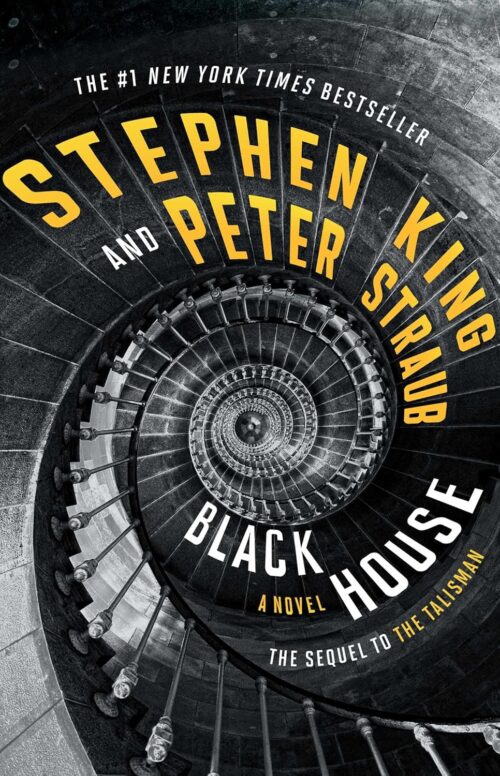
In this sequel to The Talisman, twenty years have passed since Jack Sawyer traveled through the territories in a desperate attempt to save his mother’s life. Since then, Jack has become a celebrated homicide detective with the LAPD, only to retire early and pack it in for small-town Wisconsin life. His withdrawal from society is threatened when a series of child disappearances baffles the local police force, lead by a friend of Jack’s who begs him to lend a hand to the investigation. When Jack reluctantly agrees, his memories of his childhood adventures come flooding back to him, and Jack realizes that what is happening to these children may be the result of someone, or something, not of this world.
When another child is taken, the investigation goes into overdrive as Jack races to see if the child can be brought home alive. Jack will eventually be assisted in this quest by an unlikely assortment, including his neighbor, a blind radio DJ with a knack for impersonation, and a motorcycle gang comprised entirely of college graduates turned brewers.
The Talisman is one of my least favorite of King’s novels, largely because I’m not really keen on his forays into fantasy. I’ve never read any of Peter Straub’s solo efforts, so I’m unsure how much to attribute to his involvement. Black House is occasionally written with a voice I haven’t encountered elsewhere in King’s fiction, and one I really didn’t care for. It’s an omniscient narrator akin to the stage manager in Our Town, directing the reader’s attention to certain places or events in a kinda folksy manner utterly unbefitting to the horrific nature of the plot. It’s irritating.
Black House is a frustrating experience, because every time it builds momentum it comes to a screeching halt. The book just drags on and on, over 600 pages in the end, all for a story that is actually rather simple at its heart. Eventually, I experienced a total loss of interest, such that the words on the page lost all meaning.
