


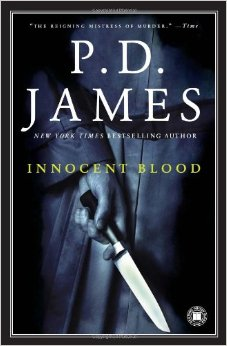
It seems like Philippa Palfrey has everything–a scholarship to Cambridge (or Oxford, I can’t remember which), comfortably-off parents, health and beauty–but she feels that there’s a part of her selfhood missing. She’s always known she was adopted, but not who her birthparents were, or why she has very little memory before the age of eight. She sets out to find the answers, and discovers a legacy of blood and horrible crime. Meanwhile, Norman Scase is a milquetoastish middle-aged, verging on elderly, man, who made a deathbed promise […]
I did not like The Red Book. I didn’t like the parents who tolerated their preteen sons watching hardcore pornography at the family dinner table. I hated the woman who had children in spite of her husband’s wishes. I hated her deadbeat husband who ignored his wife and children. I despised the woman who came to the conclusion that her emotional and physical absence during her mother’s slow, painful death from cancer justified her partner’s fling with a young woman. I loathed the woman who […]
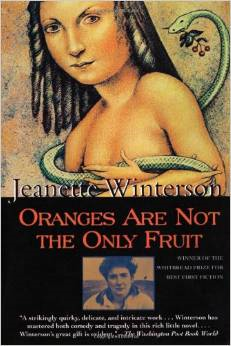
“and a weak mailed fist / Clenched ignorant against the sky!”
Oranges Are Not The Only Fruit is harsh and beautiful and sad. It’s based on autobiography, and tells of a young Jeanette growing up in a tiny town in the North of England. The claustrophobia of the town is strongly evoked–it’s the sort of place where everyone knows everyone else, everyone has a place and is expected to stay in it, and any attempts to hide or move or change must be carried out under severe scrutiny by neighbours, friends and family and probably followed […]
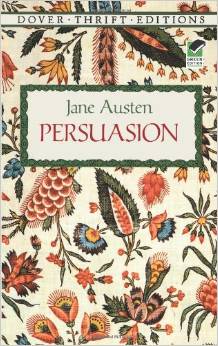
I’m not convinced
I absolutely adore some of Austen’s books–one of my first reviews for Cannonball Read IV was of Northanger Abbey. I love the energy and passion of Pride and Prejudice (“What are men to rocks and mountains?” indeed), the mischief of Emma, and the creaky doors and thunderstorms and laundry lists of Northanger Abbey. I sympathise with Elinor Dashwood, and think she could have done much better in terms of sisters and eventual husbands–but I also sympathise with Marianne’s youthful desire for drama, and think she […]

It’s like Rear Window but with more butts of malmsey
The Daughter of Time (1951) is the first novel by Josephine Tey that I’ve read, and it’s a rather unconventional mystery, so I have no idea how the style relates to any of her other detective fiction. Based around the aphorism that “Truth is the daughter of time, not authority” (Sir Francis Bacon), the novel, via Scotland Yard Detective Alan Grant, investigates whether Richard the Third really murdered his nephews in the tower. Grant is laid up in hospital and bored; a friend brings him […]
There’s a country house party in the 1920s…what do you think will happen?
A. A. Milne is a million times more famous for Winnie-The-Pooh than he is for this neat, compact and fluent little novel of amateur detectives and a body in a locked room. Which is a shame, as The Red House Mystery (1922), while not brilliant or innovative, is of value because it masters the conventions with precision and humour, creating an entertaining mystery, and likeable characters with enjoyably explicit nods to Sherlock and Watson in their dynamic. Mark Ablett is a patron of the arts, an […]
- « Previous Page
- 1
- …
- 9
- 10
- 11
- 12
- 13
- Next Page »