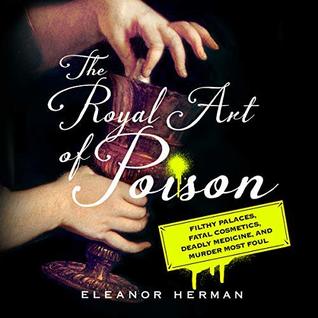
 The threat of poisoning had long been a preoccupation of medieval and Renaissance courts, but as Eleanor Herman shows, natural illness and the bizarre remedies of contemporary doctors probably caused more harm than actual poisoners.
This is a pretty salacious and chatty kind of book which also gets into lots of political intrigue, royal vices, and crime, all of which is right up my alley. I have a strong stomach, but there were parts of this book that had me gagging. The enumeration of the parasites making their home within royal guts was especially bad. If I ever must time travel I am going to take a large dose of deworming medication back with me. Also soap. And Lysol.
After first discussing the common perception of poison during this era, we then learned a bit about environmental hazards and medical quackery (both of which were much more common) before moving onto investigations of suspected poisonings in various European royal courts ranging from Henry VII, Holy Roman Emperor in 1313 to Napoleon Bonaparte in 1821. Despite the number of cases covered, the author was able to differentiate all of them, covering the history of the case, contemporary conclusions, and what modern medicine suggests the actual cause of death was.
I did wish we got a better sense of the author’s sources. While we get a good sense of from where she takes the medical information in each case, I was curious about the historical details. I recently read the extensively researched The Scapegoat by Lucy Hughes-Hallett, which also discusses the murder of Thomas Overbury, but here Herman made assertions about Overbury and Robert Carr being in a sexual relationship which I have seen nowhere else.
I listened to the audiobook, which is narrated by Susie Berneis. I thought she did a great job of capturing the chatty, almost gossipy tone of the writing.
