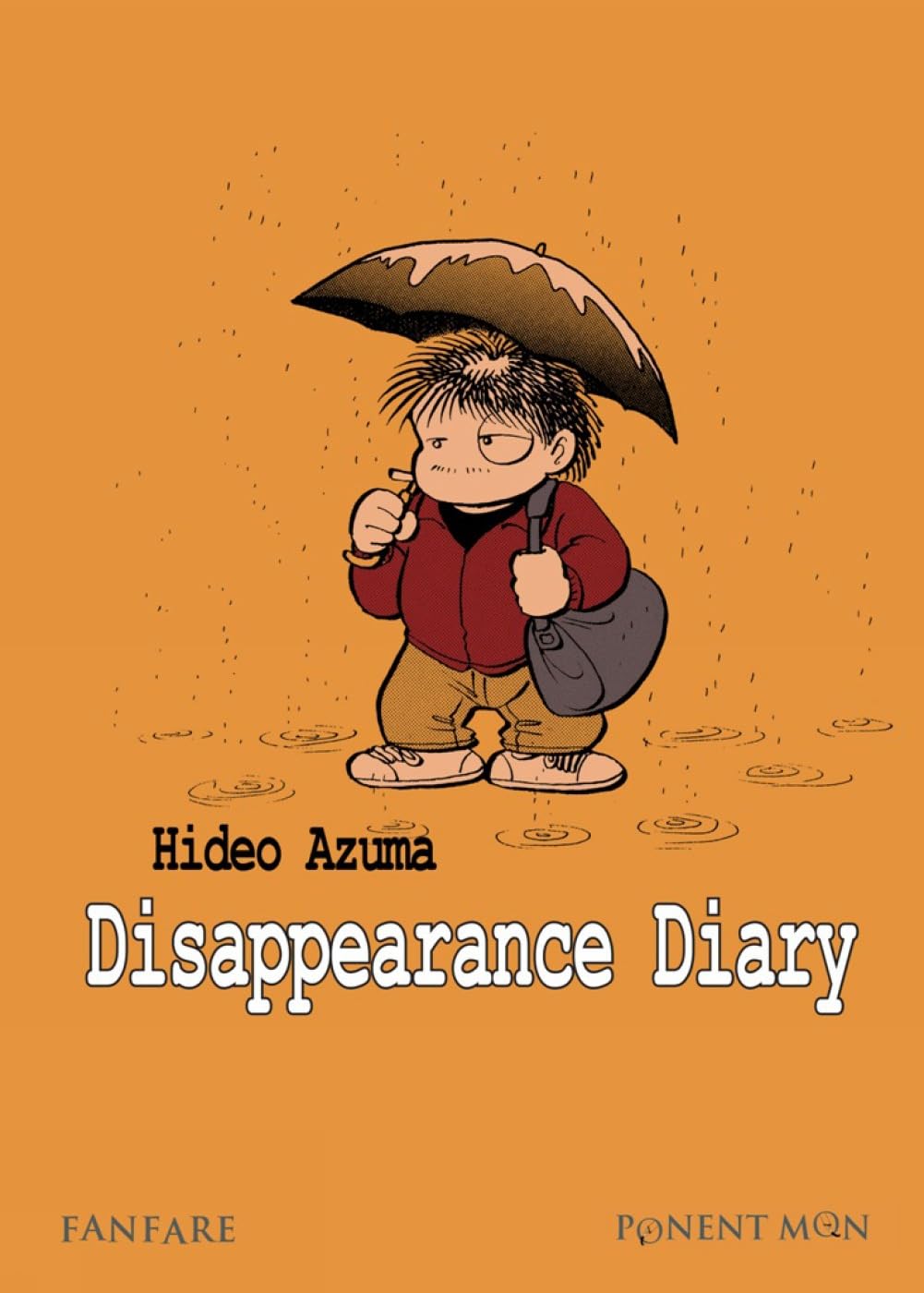
 I’d read this before but it had been a while ago, so figured it was worth a re-read. I love non-fiction, autobiographical comics, especially about mental health topics, so this was right up my alley. Hideo Azuma was a prolific manga artist in the 1970s, and the pressure from his work schedule (and I’m sure other factors) led him to start drinking and flee his home and family without a word. Azuma lived outside for a period of time and then did some manual labor type jobs before being found. He then ran away again and worked as a gas pipe repairman before he was discovered a second time and then spent some time in an alcoholic ward in a hospital when his drinking got very bad.
This is a dense book with a lot of information about how Azuma survived while he was outside, the details of how to be a gas pipe repairman, what it was like to work in the manga industry in the 1970s, etc. He has a very detailed style and if you like Japan and this period of time, there’s a lot to learn here. The different chunks of the book feel a bit dissociated from each other, it’s more like several long stories one after the other, as they leap around in time and I sometimes found it confusing. I did appreciate learning about how strenuous it was to work in manga (it still is, but the schedule he was on was brutal) — at one point he was churning out 130 pages a month, which is just mind-boggling to contemplate. It’s no wonder that he essentially had a nervous breakdown and went to live in the woods.
One thing that this book only briefly touches on is how Azuma was a major part of the lolicon group who tried to get yaoi/BL out of Comiket, which does not endear him to me. This review probably isn’t the place to get into that history, but suffice it to say I am on the yaoi/BL side and the sudden appearance of that whole thing in one panel near the end of the book was jarring. I also didn’t love that they’d flipped the book to read left-to-right and replaced all the sound effects, but that’s also a personal issue because I’m precious about fidelity to the original work. This was translated in 2008 so that tended to happen then.
I think if you’re interested in these sorts of topics, this is worth a look. Some of the sections are slower than others (the gas pipe work for me and the descriptions of the training and his day to day job) but some are very interesting (living in the woods and the hospital ward).
