 Rating:
1.5 Stars
In a nutshell:
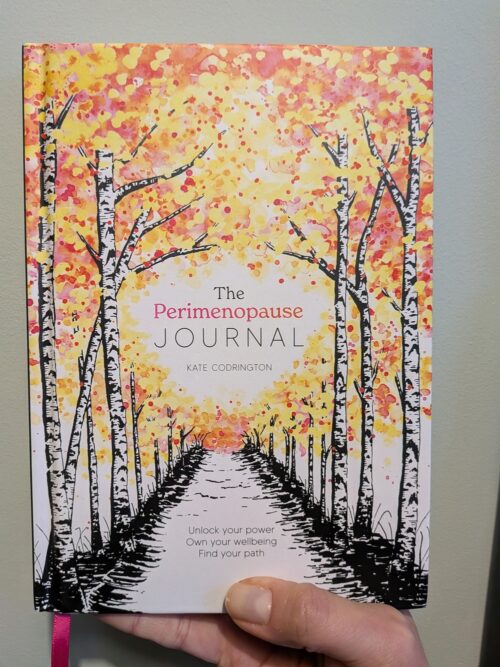
Therapist and author Codrington mixes season, cycles, and moon phases up and tells women to try to connect them, leaving this reader feeling a bit like she’s failed part of the SAT.
Best for:
Not me.
Quote that made me think:
N/A
Why I chose it:
I’m a Xennial woman. Lots of my book reviews over the next couple years are going to be on this topic. Enjoy!
Review:
Usually I start reviews with some bit of sharing to connect myself with the reader of the review and sort of explain why I might have taken what I did from the book I’m reviewing. At the risk of being a bit TOO familiar here, I’m just going to say that I am in my mid-40s and since cis women’s health is basically a joke to the medical establishment, especially when it comes to our hormones and reproductive health, so I’m just looking for a lifeboat anywhere I can find one. Unfortunately, this book wasn’t it for me.
Half of the book is the journal itself, which really just looks like a day planner and asks day of your cycle, what the moon phase is, what ‘season’ you’re in, and how you took a bit of self care that day. Personally I was looking more for something to like, track symptoms, nutrition, exercise, emotions, etc. Yes, I know there are apps that might do that, but I actually like the pen and paper method for this.
It’s all the lead up that left me a bit … befuddled. The author (as many others have) breaks the cycle into ‘seasons’ – winter is when your period starts, spring is after it ends, summer is ovulation, and autumn is that lovely bit right before your period begins. Cool. She offers some tips of things to focus on in these areas, which aren’t horrible. She also has QR links to yoga nidra meditations to incorporate. Alright.
Then it all gets kind of mixed up, and the thing that frustrated me the most is on one page she rightfully points out that in perimenopause, cycle lengths can vary dramatically from the standard (for some people) 28 days. So true! And one of the reasons why tracking is so important, to better connect how one feels to what is going on in one’s body. But then she provides six sets of ‘cycles’ for the journal part, and makes them each only 28 days long (to match the moon I guess)? That’s … not helpful. I’m still not clear WHY the tracking with the moon is relevant, and the book doesn’t make that clear.
It feels like this might be a decent journal for someone who is nowhere near perimenopause, and it’s just been slightly repurposed to jump onto the zeitgeist of people vaguely paying attention to this phase cis women experience. But it isn’t what I was looking for, and while I’ll still give it a bit of a go, the search for something helpful continues.
Would I recommend it to its target audience:
No
