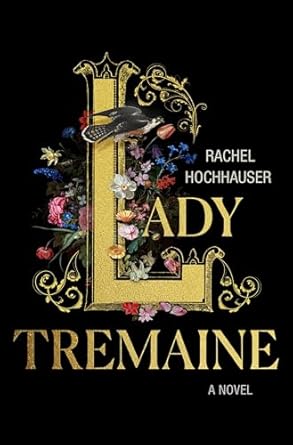
For most of its page count, Rachel Hochhauser’s Lady Tremaine is essentially bound by its premise: what if Cinderella was just a spoiled brat? Making the so-called wicked stepmother the hero of the story, Hochhauser flips the script, detailing two marriages, two dead husbands, a crumbling estate, and the pressure on women to marry well or to suffer inescapable poverty. In this telling, Lady Tremaine is a proud woman, forced to subsist on meager provisions and whatever game her precious falcon Lucy can hunt down in the forest. Her two daughters from her first, happier marriage are helping as best they can, hoping they can keep up the facade long enough to attract prosperous suitors and help their beloved mother escape penury.
Meanwhile, Elin, the daughter of Lady Tremaine’s much-older second husband, is sitting relatively pretty, her father having left behind a trust for her care and well-being that left out his wife and her other children. Elin is a meek and mild girl, who lives by the empty maxims in a cherished book of etiquette and has a penchant for fainting straightaway at any unpleasantness. Try as she might, Lady Tremaine can’t help but feel resentment creeping up toward her.
That resentment grows exponentially when Elin is the only one of the three girls invited to a ball being thrown by the prince. Though Lady Tremaine is able to wrangle invitations for her daughters, it is still Elin who emerges as the star of the night, having entranced Prince Simeon and danced with him all evening. (No mention of glass slippers, though.)
Here, though, is where Hochhauser abandons the fairy tale and branches out on her own, devising a truly twisted rationale for Prince Simeon’s desire to get engaged and married in such quick succession. As Lady Tremaine realizes what is actually going on, she is forced into a diabolical ethical conundrum: will she do the right thing for the ungrateful step-daughter she can barely stand, or will she sacrifice Elin for the ultimate benefit of her two biological daughters?
Lady Tremaine overcomes its one-note high concept premise by becoming something much darker than its source material, but that switch can’t paper over the problems with its pacing and lack of character development.
