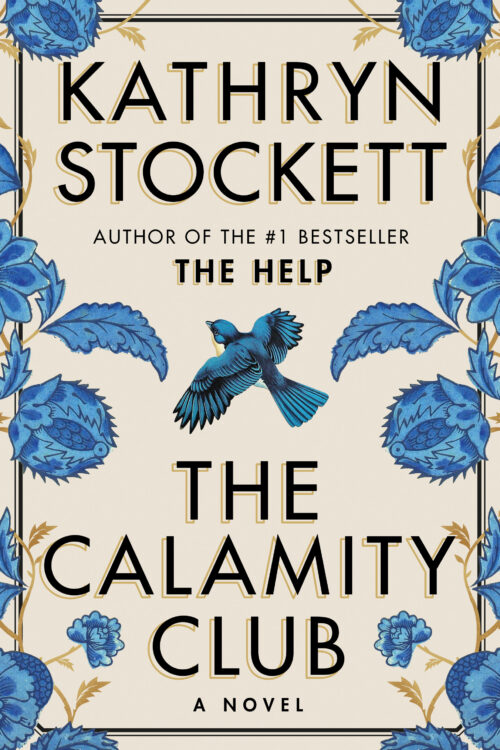
It’s been seventeen years since Kathryn Stockett put out her debut novel The Help. Her second, The Calamity Club, is also set in Stockett’s native Mississippi, albeit about thirty years earlier, in 1933. The story follows two protagonists. The fist is Birdie Calhoun, a 24-year-old single woman traveling to Oxford to visit her sister Frances and her new husband. Birdie’s family is in danger of losing their home, so she has been sent to plead with her sister’s well-to-do new family, the Tartts, for some financial assistance. But not everything is as it seems, and Birdie soon finds herself stuck in Oxford trying to help her sister’s family hang on to what they have.
The other main character is Meg, an 11-year-old orphan at the Oxford Home for Orphaned Children, where Frances volunteers. Meg is being severely mistreated by the woman in charge, Mrs. Garnett Pittman, and when Birdie finds out about it, she tries to intervene. Meg is a bright, friendly child, so the real reason for his mistreatment is a mystery that builds over the course of the novel. Meg seemingly escapes her troubles when she is adopted a young couple, but their veneer of wealth hides some ugly secrets. Meanwhile, Birdie has uncovered what really happened to Meg’s mother, Charlie, and tries to find a way to reunite mother and child.
The problem, as it is so often, is money. In order to come up with the money to save the Tartt family home and rescue Meg, desperate measures have to be taken. Charlie comes up with an outrageous plan that Birdie goes along with reluctantly and a little naively. (The title gives you a bit of a hint, but I won’t spoil here.)
This, for me, is when this very long novel started to hit a wall. Stockett really takes her time getting to this point, establishing the financial and emotional stakes of the situation. She then slows down even more, drawing out the action as Charlie and Birdie bring their plan into fruition. However the reader feels about their decision, from either a practical or moral standpoint, I doubt many will appreciate the laborious nature of this section of the book. Even worse, Stockett really rushes her ending, grasping for an emotional high-note instead of building up to it, totally throwing off the pacing.
The Calamity Club is a book of extremes. Most of the characters are either so, so good, or downright evil. Birdie is hard-working, sensible, and helpful, but despite narrating half the book has a shallow inner life. Meg is the ultimate sympathetic figure, a precocious orphan. Meanwhile Mrs. Pittman at the orphanage is practically hissing with every line she utters.
Stockett does a fair job of bringing the world of her characters to life, but her prose is too frequently didactic and expository. The unlikely plot is not thoroughly investigated enough, and the characters too easily categorized. Readers who have been waiting seventeen years for Stockett’s next book could be forgiven for being disappointed.
