 CBR18 BINGO: Wheels, because Makepeace’s family (and others) moved to the Far North to survive
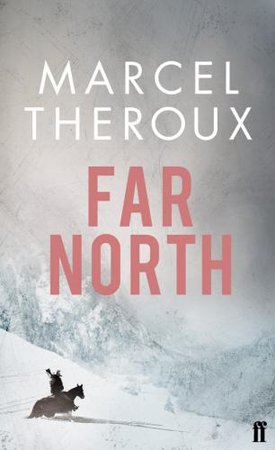
Far North takes place in a dystopian future that is usually depicted as arid wasteland. In this case, the wasteland is the frozen tundra, which is represented rather beautifully on the book cover. A lone figure and a horse stand gazing across the snow-covered landscape; it looks peaceful and hints at a more beautiful story than one finds within. Not that Far North is completely bleak; there’s an unusual undertone of resilience and the instinct to survive, even as the narrator makes statements like, “My life didn’t even count as suffering. It was one long cruel joke that the wind had written on the snow.”
At the start of the novel, the main character, a sheriff named Makepeace who is the lone survivor of a failed community, is patrolling the ruins of the town and salvaging books. An encounter with a refugee and a glimpse of an airplane inspire Makepeace to journey into the unknown in search of other survivors and communities. Much suffering is encountered along the way.
I’m intentionally keeping the details sparse to avoid spoilers, but this is much more of a “mood” novel than a “plot” novel. Lots happens, but the tone of the writing is what kept me engaged. These days, I can’t help but compare any dystopian work I read to Station Eleven, the most beautiful book about end times ever written, which puts Far North at an unfair disadvantage, since the similarities end with the fact that horrific events have nearly brought down the human race (I should also note that Far North was published five years earlier than Emily St. John Mandel’s masterpiece). With Station Eleven, the triggering event is a pandemic that acts very quickly; in this case, the implied culprit is climate change, which has led to the slow starvation of populations starting with those in the warmest climates and moving slowly north. I’ve seen Far North compared online to The Road, which I haven’t read and so can’t comment upon, but the comparison has piqued my curiosity and moved The Road higher up on my TBR. For me, the writing seemed most similar in style to Connie Willis, one of my favorite science fiction writers, in the way Theroux lures the reader into unfounded assumptions and then quietly challenges them (Willis’s “A Letter from the Clearys” jumped to mind from the beginning, even though it’s been decades since I read that story).
At times I got lost in the writing. Many thought-provoking passages stood out to me, as when Makepeace, early in the novel, attempts suicide by drowning: “I shut my eyes and tried to force myself deeper into the water, but my body was struggling against me. It felt like I wasn’t killing myself but some poor, unwilling fellow who wanted nothing of it. His legs were keeping me up and his sharp, shallow breaths were putting air in my lungs.”
I won’t say the plot let me down, but it didn’t seem as tight to me as I had hoped. When I started to lose interest, the writing pulled me back in; yet, something about the novel left me slightly dissatisfied, as if I’d eaten an appetizer that was delicious but didn’t quite sate my hunger. Overall rating, 3.5 stars.
