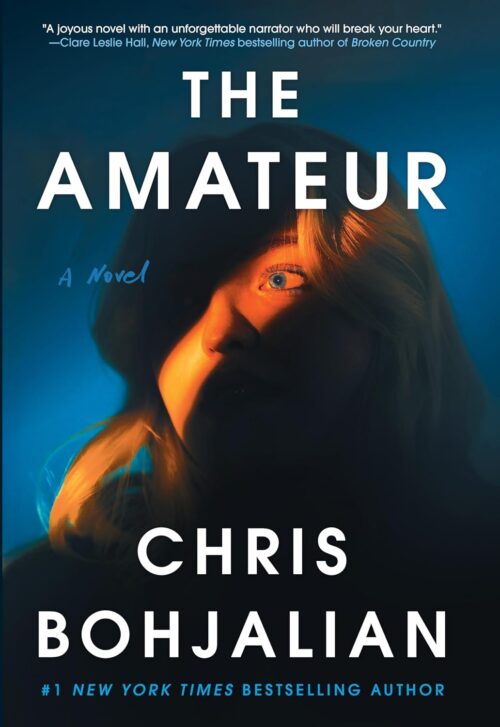
Chris Bohjalian’s The Amateur is a novel centered around a golf course tragedy. While practicing on the driving range at her local country club one day in 1978, teenage golf prodigy Mira Winston hits a ball through an unseen hole in the net just as one of the caddies, her high school classmate Kevin Foster, is walking by. Struck in the head by the projectile, Kevin, who was working to save up money to pay for college, is pronounced dead at the scene. Mira, who had been weeks away from heading to Yale to play college golf, puts her clubs away and quits the game for good, even though everyone tells her that she’s not responsible for what happened.
But is that really true? When it is later discovered that the net Mira was hitting into had been tampered with, Mira’s culpability comes back into question, and it’s not long before the police, the victim’s family, the country club, and even the netting’s manufacturer have decided that she’s to blame. Facing both a criminal and a civil trial, Mira’s life starts to spiral as she turns to drugs and sex with older men to handle the stress of her predicament.
The Amateur is somewhat awkwardly written as a first-person account from the present day, with a now fifty-something Mira narrating these events from some remove. It accentuates some deficiencies Bohjalian, a man, has in writing a female protagonist. Present-day Mira is meant to be a best-selling novelist, but her speech is peppered with platitudes and commonplace observations on “the way we live now.” Her frequent asides calling out the misogyny of a given comment or action made by another character gets old after a while. Obviously, misogyny is a real thing that this character would absolutely have experienced, but Bohjalian should trust the audience to understand what’s going on without the need for hand-holding.
The other big issue with The Amateur is that is ostensibly categorized as a “thriller,” but there are precious few thrills to be had here. The plot is fairly light on events as Mira waits around for her cases to get to court. A desultory “meet cute” with a Vietnam veteran college student is hampered by a distinct lack of characterization beyond generic class markers. There could’ve been something interesting in Mira’s self-serving justifications for her bad behavior, but Bohjalian seems uninterested in going down that road. The result is a 300-page novel that feels like it could’ve been half as long or even less.
I will give Bohjalian credit for this much, however. The book has an ending I didn’t see coming until right before it happened, just the way you want in a story like this, and I thought it was surprising and interesting without resorting to absurdity or theatricality. It’s a nice touch.
