 Cbr18bingo Map
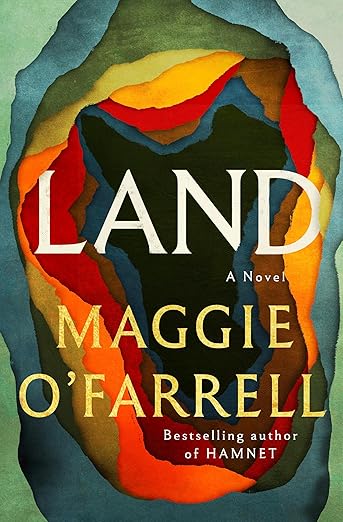
I am a great admirer of Maggie O’Farrell’s novels, but she is the literary personification of “You guys wanna see a dead body?”. O’Farrell does not hesitate to get into the ugly, nitty gritty of life: complex family dynamics, betrayal, grief, sorrow, and violence. She also is comfortable in a variety of time periods: Renaissance Italy, Elizabethan England, 20th century England, and in Land, 19th century Ireland. Yes, this time O’Farrell brings the reader to the Great Famine and its aftermath. That piece of information alone would be the indicator of terrible events to come, but we know from the first pages that her characters, looking back on their lives, have been through some particular shit that haunts them still. You wanna see a dead body? Yes. Yes, I do.
Land is the story of a particular family and of Ireland itself. Parents Tomas and Phina were children during the famine, and the way O’Farrell unspools their experience of surviving it is gripping and horrific. The reader gets a very real sense of the scars that survivors of the famine carry on into adulthood and the trauma that revisits them throughout life. The couple live in a tenement in Dublin with their children Enda, Liam and Rose. Rose is just a toddler but Enda is 11 and the queen of the neighborhood children. She is always out, leading games and exploring everything. She is smart and is encouraged by her teachers to consider becoming a teacher herself one day. Liam, a year younger than Enda, is rather in awe of her, and the two of them are close. The family struggles financially, but so does everyone else. Tomas is a surveyor and mapmaker who has been working for the English “redcoats” as they survey Ireland. When he travels with the English to Ireland’s west country, he takes Liam along as an assistant with the thought that Liam will surely follow in his footsteps one day. But what happens to Tomas and Liam on a remote peninsula in the west will utterly upend the lives of the whole family.
Exactly what that transformative event is is not completely clear at first. Tomas emerges from a hidden copse — a wooded area with a water source that seems mystical or magical — very different from the man he was when he entered it. The copse has never appeared on a map before and Tomas decides that it never will. O’Farrell devotes a segment of the novel to the history of this place, from about 2000 years ago to the present. It is a history that involves conquering and colonizing, which means considerable violence. For Tomas, the revelation is that making maps is an act of colonization. The English who employ him find Tomas useful because he draws excellent maps and because he speaks the native language and can question locals about the land, its inhabitants and history. But Tomas, as an Irishman, gets no credit for his work; it’s the English supervisor whose name appears on the maps. And the English, as colonizers, will rename all of the places and decide which stories matter. The erasure of Irish history, names and experiences sets Tomas off and will lead to a series of events that will traumatize him and his family. Without going into detail, I will add that the Catholic Church’s role in colonization and cultural erasure is also front and center.
What really hits me as a reader, though, is what happens to this family. A fourth child, Eugene, is a particularly compelling character. He never speaks but seems very attuned to others’ feelings and to the natural world. As this family grows and grows up, tensions between parents and children and amongst the children themselves come to a boil. Tragedy upon tragedy ensues. And yet I could not put this book down. I needed to see every dead body and O’Farrell delivered. This is truly a haunting tale.
