As promised by the title, Graham’s Book and Dagger delivers plenty of stories of academics and librarians helping the Allies in World War II through espionage and other covert ways. As the book notes, the best spy isn’t someone dashing like a James Bond. It’s someone who can’t even get a waiter’s attention. Bring in the nerds! No one can get away with collecting books, or asking questions about train gauges, or fiddling with a dam, quite like a nerd. 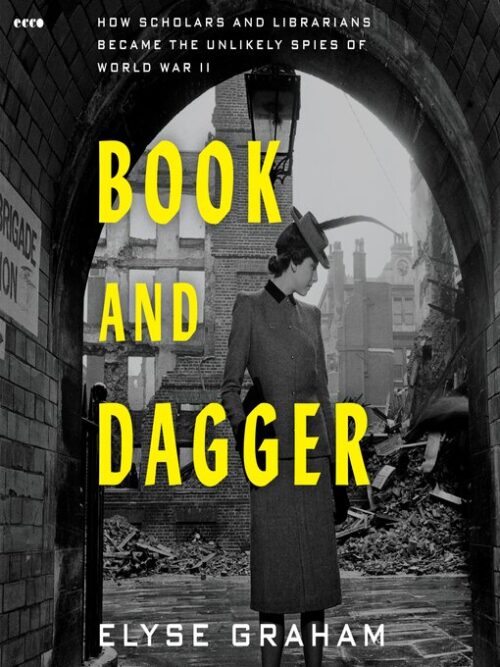
In my mind, though, the stories Graham tells support a larger narrative, one in which outsiders and outcasts use the very attributes that made them “other” against their oppressors. Over and over, the perceived weaknesses and flaws of the Allies are the very things used to bring down tyrants.
After finishing the book, the word that made the most sense was hubris. The Nazis saw many groups of people as inferior, and therefore could not believe those groups would pose any credible threats to Nazi power. The blind spots to the strengths of others and to the Nazis’ own weaknesses allowed the Allies to gain incremental advantages over time that eventually proved enough to topple a growing empire. Or, to quote Graham, “Authoritarianism is a catastrophic intellectual handicap.”
Awesome.
Some of my favorite stories involved using artists of various types (e.g., theater, makeup) to spread credible misinformation about which site would be the true D-Day landing spot. These efforts included little things like making sure that fake tanks set up elsewhere had appropriate shadowing, so that overhead surveillance planes would take realistic photos.
I was also interested in how Allied academics collected and read through mountains of seemingly innocuous public records, such as local business directories, to determine where, say, a certain Nazi tank part may be manufactured. That factory could then become the site of sabotage. No hidden recorders or eavesdropping would even be necessary. A cut hose in a factory important to a supply line may do more long-term damage than rolling tanks through a town. If the Allies could gain a 5% advantage here or there, that could turn the war.
One problem that an intellectually arrogant person faces at some point is ossification. “I am right. End of story.” That kind of thinking leaves no room for curiosity or creativity. There’s no room for anything new, or for progress.
Graham is clearly trying to use history to teach a lesson about our contemporary times, and how contemporary attacks on learning and universities are a huge social problem. Even since the book came out, I think we’ve seen why liberal arts and humanities are so important for every person. The AI techbros are speed-running us towards an unnecessary dystopia.
“The Jewish poet Heinrich Heine was right to say, ‘Those who burn books will, in the end, burn people.'”
I’d recommend the audiobook in particular to just about anyone. Graham keeps things moving and tells some entertaining stories (the guy who smuggled dozens of people while doing a Bogey impression), but never treats the subject matter glibly. And Saskia Maarleveld has the perfect voice for the project.
