CBR 18 Bingo: FRIENDS
Back in mid-March, I was like, “Life is leveling out! I can write reviews again!” And then my beloved 16-year-old dog, not two weeks later, passed away. And I did not write any reviews, obviously. I’m not going to tempt the fates again by suggesting life is leveling out. Life is happening. Here I am. I’ve been reading books all this time, and I want to write about them again. Let’s see if I can do it.
I started Jessica Traynor’s New Arcana back in those bad old days of March, dropped it like poison, and only just picked it up again in the past week. I’ve been reading 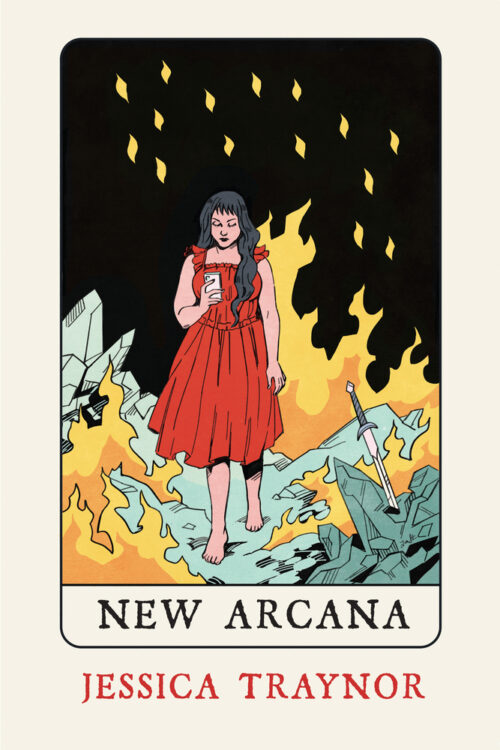 Traynor for a research project (loved Pit Lullabies especially), so I knew I needed to get back to it, but it’s a sad, heartbroken collection of poems in its own way and when I was sad and heartbroken, I couldn’t face reading it. Traynor’s sorrow was different from mine: the event running underneath many of these poems is the death of a girlhood friend (whom Traynor refers to using the pseudonym ‘lydia deetz,’ yes, like the Beetlejuice character) by suicide as an adult, a woman who is clearly much like Traynor’s speaker: grown up, married, with children, and yet also with a suffocating anguish that did not make living possible. Traynor is wrestling with memory and grief, and the guilt of those left behind, sifting through the detritus of her teen years to understand and remember her lost friend.
Throughout the collection runs imagery of the tarot deck, with the suggestion of cards being pulled, of the speaker attempting readings, reminding us how we all try so furiously hard to make sense of a world that often defies all sense. Traynor nods not only to the ways in which girls, particularly, are made to suffer in this world, but in the dislocating feeling of watching your own child be vividly, joyously alive while also looking at news photographs of migrant children washing up on beaches, drowned. How is any of this fair? she is clearly asking. And, of course, it isn’t. The tarot cards aren’t going to give answers: they offer symbols, suggestions that sometimes help us reframe what we are experiencing, or reinterpret it, and yet as Traynor points out in some points, and times they seem as mute and foolish as every other attempt we make to reach the transcendent in search of answers.
The Tower
Lying awake, a fizzing on the plains
of my skull. I draw the towerand feel the lightning enter me
cauterising as it goesuntil my bat heart has no purchase
in the hole of my chest.Underneath the cards’ laminate the two
of us are falling, in flames.We are burning and we are falling
and we are stuck.
Perhaps this is why she includes, here and there, her “New Arcana,” suggestions or ideas for new symbols and archetypes to expand the existing Major Arcana of the tarot deck. For instance, “The Thief (XXIX)”:
While you were sleeping
I took:
a page from every
one of your books
your full stops
all the green letters
from your name
The collection provides no answers: the closest we get to resolution is the speaker attending ‘Lydia’s’ funeral and reflecting on how the living keep stumbling on, even after such terrible losses. Life has its beauties, too, and its loves, and these draw us forward even in the midst of so much that threatens to drag us under. All we can do is try to understand, and try to keep living, with as much tenderness as we can hold onto.
W. B. Yeats wrote long ago that of the quarrel with others, we make rhetoric: of the quarrel with ourselves, we make poetry. I doubt he would have had anything like Traynor’s collection in mind, and yet I think it’s such a remarkable affirmation of his claim. Traynor is wrestling so clearly with herself in this collection, and the result is piercing and memorable.
