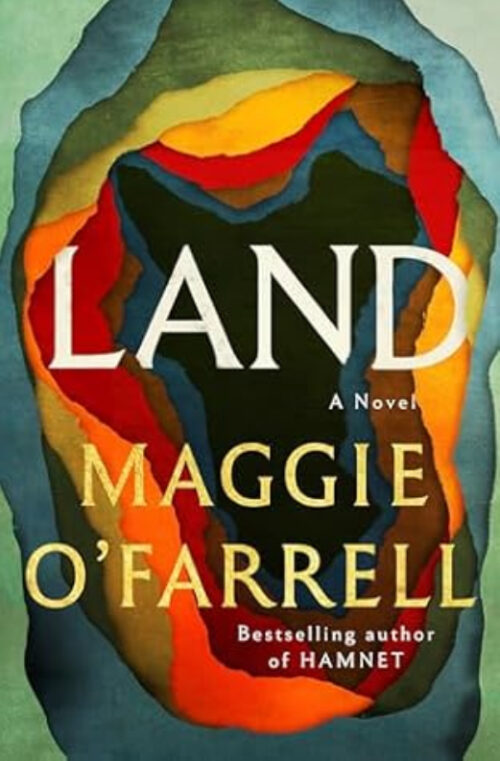
Bingo Square: Map (the father is a map maker)
This book made me cry twice, I loved the way it tied back to history, and also how it explored the Great Hunger, showing the impact on families and the land. It also showed hints of the many complex themes throughout Irish history, some in conflict and some in conversation with each other, from the role of the old ways and the Catholic Church, class issues, colonization and the relationship with the English. There’s this large focus on the land and its connection to the people and yet, while families and people felt these ties to their land, it was also something that could so easily be lost in a moment, as greedy landlords could raise rents whenever they wanted, and certainly, they weren’t helping their tenants during the famine. Tomás is an Irish mapmaker, working for the English to complete surveys of the country, when he has a break down at the beginning of the book. He is also using these requested updates to 20 year old maps to document the devastation of the famine (something he experienced first hand but repressed until this point), but circumstances come together to make him believe there is more harm than good in his work, as he decides he is enabling the enemy, the redcoats, to more easily mine and strip the land.
The novel primarily focuses on Tomás and his family, including his wife Seraphina, and their four children (though Tomás and Phina are my favorite characters of the family). Liam, who was present and working as his father’s apprentice during the breakdown, ends up turning harshly against his father as a result and finding refuge in the local priest. While there are named characters outside of the family, including the priest, many characters also are simply referred to as the younger fisherman, the widow, the sisters etc throughout.
In addition to family and the 1865 timeline, O’Farrell takes the reader back millennia to show the history of the country through this untouched and magical seeming land (this was one of the parts that made me tear up a bit). There is some magical realism woven into this story, a bit of otherworldliness but it is more atmospheric than anything.
I loved the glimpses and hints we got into the lives of the supporting characters, especially the widow, and how through them, we understand how devastating the Great Hunger was, surrounded by reminders of families lost. And they are so generous in sharing those reminders with the people still living and the hope of the future generation.
However, for everything I quite enjoyed about this novel, it’s ultimately not as satisfying as I would have hoped, and it’s mostly because of how it all concluded. The family in this story goes through it, and the trials and losses seem to be rather unrelenting. There are hints of things coming full circle and some characters maybe finding some resolution but there are many more instances where only the reader achieves it, leaving the characters lost, opportunities missed. Usually, in these types of multi-generational epics, there tends to be some type of catharsis, some point where the characters reach an understanding with each other, or there’s some type of ending that while bittersweet, ultimately leaves the reader (and characters) with peace. While I wouldn’t go as far as to say everyone’s endings were tragic, they may have been a bit more life-like than I want from fiction, connections lost, realizations made too late, and the characters left with unresolved strings and questions even as they labor on.
Then again, it might just be my mood lately – while I think The Odyssey was a very well-done adaptation and really liked the themes Nolan chose to explore, the movie also ultimately left me feeling a bit down.
