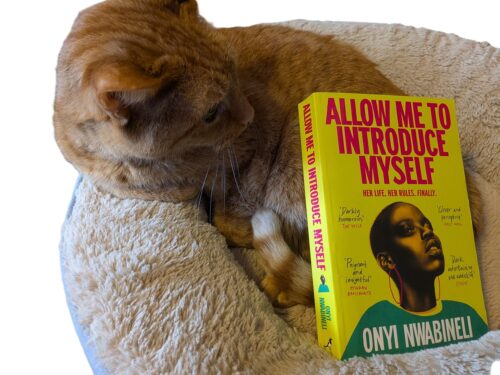
 Rating: 3.5 Stars
In a nutshell:
Former child social media darling Anuri (the correct markings on her name will not be accepted by my word processing program, but you can view the name and learn how to pronounce it here) has managed to mostly extract herself from her stepmother’s social media empire, but she is worried about the impact it is having on her 5-year-old sister’s life.
Best for:
Those interested in how social media affects children when they are the stars of it.
Quote that made me think:
“And control, when you have lost everything, when hope has been extracted from you like a black tumor, is everything. Even when it is a lie.”
“If there is one thing white people hate more than anything in this world, it is the implication that their racism makes them racist.”
Why I chose it:
Monthly book club option that seemed the most interesting.
Review:
I think this book tries to do a bit too much, and in doing so ends up not doing enough. I think I get what the author was going for, and perhaps my response means she was actually successful in doing it. But maybe not?
Anuri is the 25-year-old subject of the book, and most of the story we get is told from her perspective. She is the daughter of Nkem and Kainene, born in Nigeria but taken to the UK by Nkem when Kainene dies in childbirth. While there, Nkem meets nurse Ophelia, a Swedish woman living in the UK. The two eventually marry, and Ophelia turns Anuri into a social media darling.
We learn at the outset that at some point Anuri has been able to remove herself from being featured by Ophelia, but she is concerned in seeing the pattern repeated with her sister Noelle. Anuri is both successful and struggling – she has a thriving hair styling business and also makes bespoke candles. She has two very close friends who have known her nearly her entire life and so know what she has been through. But having grown up in that weird social media spotlight has resulted in issues that she is trying to get through.
The book gives us glimpses of the perspectives of Nkem and Ophelia, making it clear that they are not exactly monsters, but there’s not enough of them to create enough complexity for me. I would either preferred these sections be excised completely, or that they be further built out. The book is a decent length – over 300 pages – but I felt it needed more. Both more editing and more of the story. The resolution came quickly and was somewhat satisfying but also felt almost tacked on. And yet perhaps the author meant for the main conflict to not actually be the main focus? I could see that argument, but it doesn’t fully work for me.
That said, I am glad I read it, and I would read more books by this author.
Would I recommend it to its target audience:
I think so. It’s definitely a clever story and a different take on social media.
