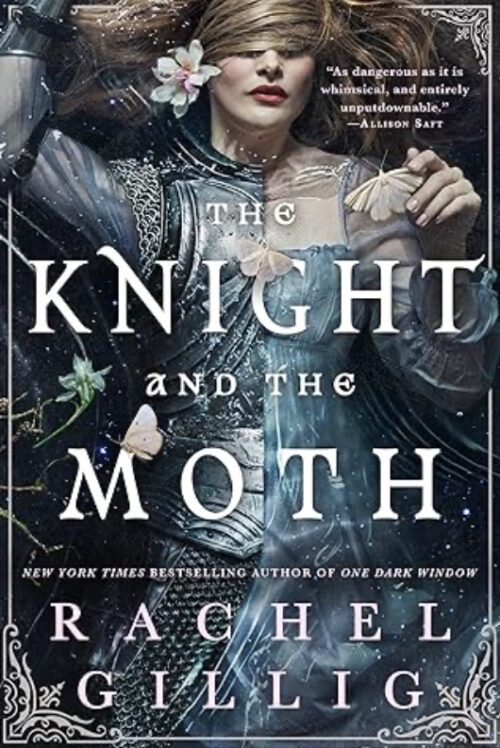
While I liked the author’s previous duology, The Shepherd King, I didn’t love it. It was one of those where I quite enjoyed the magic system and the plotting but thought the characters needed a little bit more, and that they were missing some fairly obvious clues. I really enjoyed The Knight and the Moth – the main character just felt so much more developed. While I predicted quite a few of the developments that happened later, I also don’t think they were to the point where they should have been obvious to the characters. Instead, it felt like the clues were peppered in enough to make the pay offs work but someone that’s read a lot of fantasy would likely make some more educated guesses. And some of the details didn’t play out quite as expected, plus there was one thing that genuinely surprised me (though in retrospect, the clues were there – none of the developments are unearned or only work because the author was hiding things to make them truly feel like they came out of left field).
The main character and narrator, Six, is one of the Diviners (a seer) at the cathedral built around the spring that grants visions. She is one of the six seers – all came into their service as young foundlings around the same time and don’t remember their past. There are strict rules at the Cathedral: the Diviners never take off their gauzy veils, they aren’t supposed to leave the grounds etc. They are now young women, approaching the end of their term and daydreaming about the possibilities of their futures. People from all over the kingdom visit the cathedral to ask their question. The act of divination sounds rather painful – it involves almost drowning in the spring and going through a series of drops in a dream to see the symbols of the gods and answer the question based on how the symbols appear.
The novel kicks off with the new ruler’s visit to the Cathedral. Something about one of the knight’s lack of faith sets off Six’s rebellious spirit, and the six women escape the Cathedral for a night to attend a local festival. Shortly after, things start feeling off, and Six’s adopted sisters begin to disappear one by one.
Her desire to find out what happened ends up with Six on a quest as part of the king’s entourage. One of the gargoyles of the cathedral has come along with Six and is definitely one of the best parts of the story. The grumpy knight from before is of course set up as the love interest, and while the characters for the most part didn’t stand out, they also didn’t act in ways that annoyed me for being too trusting or obtuse. There were a few moments that may have gone too easily for the characters, but overall, I was fine with that because I quite enjoyed how the novel slowly unpeeled the mythology of the world and exposed the real history.
The ending ultimately was slightly anti-climatic for me though it ends on a cliffhanger, and I am looking forward to the next novel. We learned so much in this novel that I am not sure there will be many reveals left but I am curious to see what else might be in store.
