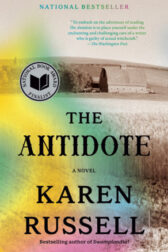
From the afterword/Lost Land Acknowledgement by Dr. James Riding In: “The Antidote uses fantastical conceits to illuminate the holes in people’s private and collective memories, the willful omissions passed down generation to generation, and the myths that have been used by the U.S. government and White settlers to justify crimes against the citizens of Native Nations and the theft of Native lands.”
And the author uses those fantastical conceits very well. The Antidote is a beautifully written, sad, interesting, and clever novel. It’s a fantastic blend of magical realism, i.e. prairie witches and magical cameras, and historical fiction, i.e. the Great Depression and dust bowl drought in Nebraska in 1935.
In The Antidote, the prairie witches serve as a repository for people’s memories on the plains of Nebraska. People make a deposit of a memory with the witches, who store the memories in their Vault. Some people deposit their good memories, to make sure they don’t get lost. And some people deposit their bad memories, so they are no longer burdened by them.
Although I really did like this book, it wasn’t always an easy read. Like a prairie witch’s vault, this book contains some lovely things and some pretty horrific things. For example, the prologue is about the townspeople of Uz “culling” the local jack rabbits, and yeah, it’s as inhumane as you can imagine. But, I loved the chapters about the local girls’ basketball team. And even in the middle of the horror of the home for unwed mothers, there is some joy.
4/5 stars, do recommend
