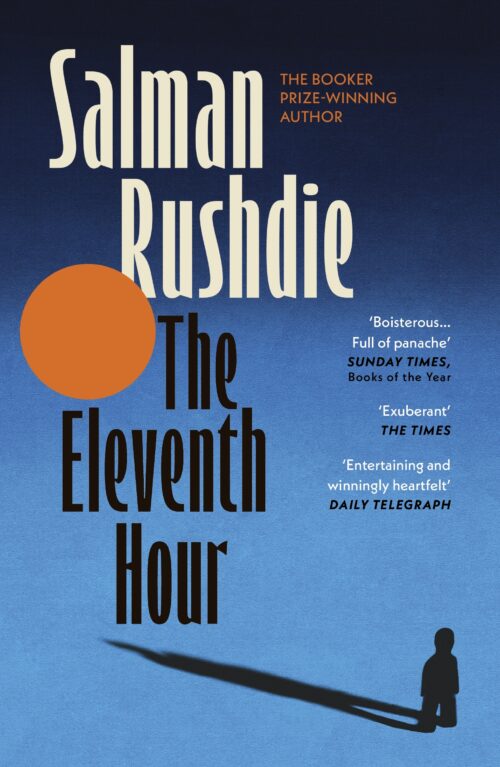
Salman Rushdie has always played with time, but as his own clock starts to wind down it sees him more reflective than before. There are 5 stories in all, 3 novellas, and 2 short stories and 2 of these have already appeared in print in the New Yorker. Most of these stories were written after Rushdie’s very intimate brush with death in 2022 and the emotional weight of this event and his life can be felt through them all. It feels like his most emotionally honest work, warts and writer’s foibles and all.
The lead-in to this series is the first to be published before, In the South. A tale of a profound friendship that defines 2 men through their opposite characters and lives, its inclusion here sets out the theme of how we redefine and reassess our lives as the light grows dimmer. Although published in 2023, this was written before his attack in 2022 and lacks some of the emotional introversion found in the novellas. While it has some aspects of magical-realism, it feels the most grounded of the 5.
The 2nd story is the first novella, The Musician of Kahani. This one almost acts as an apology to (many) ex-wives and children, in the character of Rajani. A serious man who marries a woman 20 years his junior and then abandons her and their daughter to become a soup chef in a sex cult, it’s hard not to read this as Salman looking back on his earlier life. As the story shifts into more magical realism through the genuine tragedy of his daughter’s miscarriage, his stand-in’s apology rings hollow, feeling unearned and almost unsavoury against Rushdie’s own personal tragedy with a miscarriage. Rushdie’s always played the absurd against the serious, but as we see the emotionally and physically shattering devastation wrought on and by Chandni after losing her child, the buffonery of her father is almost cartoonish here.
The next novella, Late, offers a reflection on his own time at Cambridge with both the ghostly don and a foreign student acting as his surrogates. It feels like the most emotionally honest of the stories, but probably because it doesn’t need much examination under harsher light. Being both the learned insider of the establishment professor and the curious outsider of the foreign student, Rushdie offers a light diagnosis of the dichotomy he has waxed lyrical on throughout his life.
Oklahoma offers his examination of his contemporary life in the US. Again, we see him through 2 characters, a junior writer who is criticised for being a hack by creating characters based on people she has met in, and in the most experienced writer who again abandons his family to live a seemingly idyllic life. Both of these characters show an almost overwhelming level of lamp shading in their existence; both writers being clearly versions of Rushdie. In its final few pages, the elder writer questions if he is truly happy or if it just appears that way to others, but Rushdie flinches rather than digging deeper.
The final story, The Old Man in the Piazza, bookends this collection, and is again written before 2022. Here, Rushdie’s surrogate is a man who becomes, through various twists, the ultimate arbitrator of people’s various moral conundrums. It’s not hard to see how Rushdie’s public self may feel that way, having lived so long under heightened security following the publication of The Satanic Verses and subsequently being a more meaningful advocate for a form of free speech than current societal debate allows. While it closes off the quintet, it lacks the emotional depth found in the 3 novellas and left me feeling a little robbed of the emotional heft found earlier.
