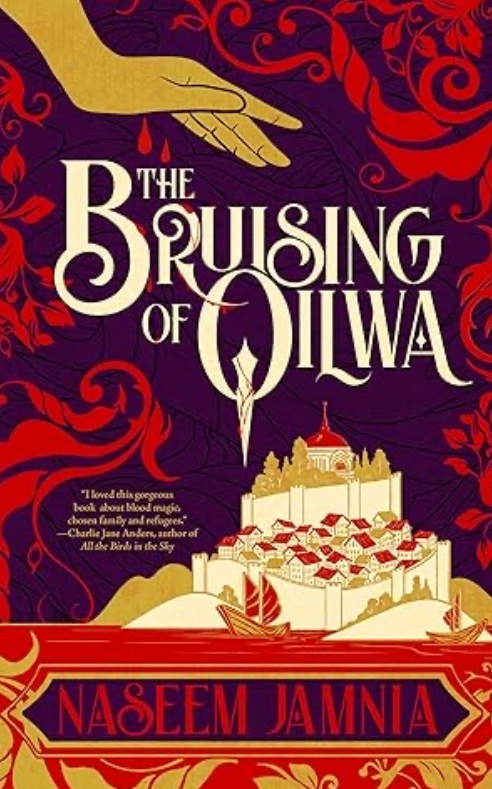
In an effort to meet people after moving to a new town, I have joined an abundance of book clubs. This novel was for the second one that I’m doing through the local independent bookstore, the Queer Lit book club. We met last week and it was such a fun time; I even ended up staying an hour past the meeting talking to some other participants about books and video games (the games was more of a “listening” section for me), especially Dragon Age, since the author referenced it in the acknowledgment section.
Unfamiliar with that game, I didn’t notice the parallels between that story and this novella (though the other members assured me there are some), but I very much saw the parallels to history. While inspired by Persian history, the themes also felt reminiscent of other countries and empires: formerly occupied countries grappling with finally having freedom after the empire collapsed (like Poland), and stories where the oppressors have become the oppressed, refugees and fugitives after centuries of dominance.
While before the book club, I would have simply said I enjoyed the novella, the discussion also helped me clear up many thoughts. While we all want more from this world (and the author very much makes it sound like this was originally intended as a short story to explore a world they were writing a novel about; unfortunately I can’t find anything about future publications online but hopefully), it is also very much a lived in world. This isn’t an instance where the world building is sparse and we needed more for it to make sense. This is a story that drops small hints and lines about so many other things that are going on that the reader wants to explore more. Firuz’s story as a healer is but a small snapshot in a world where their former home is plagued by two disasters driving the refugee crisis, a world where magic exists but some schools are more respectable than others, and where a young girl seems to have extraordinary powers.
There are also some interesting points about the availability of medical care and treatment for non-binary and transgender people in this world; treatments exist but the knowledge and access to them is limited and hard to come by, creating a divide between Firuz and their brother because Firuz easily had access to something Parvati desperately wants when they still lived in their own country with their own people.
Firuz hides their abilities with blood magic to avoid persecution but it also gives them the ability to more quickly identify a medical mystery that is taking root in the community and among their patients. The use and descriptions of magic feel much more visceral than in some systems, and show the cost and price. The author is a scientist and it’s reflected in their writing. Someone mentioned they felt the writing felt sparse but I honestly thought it made the novel feel like one of those fantasy stories that could also easily appeal to a literary fiction reader since the magic feels more like background to all the other themes around oppression, refugees, systems of power, capitalism and more.
So definitely recommend this one – it holds up on its own but I also hope we eventually get to spend more time in this world, whether that means a series of novellas or a larger epic journey with the occasional side story like this.
