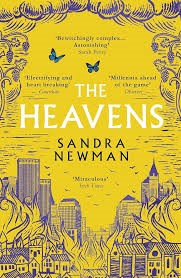
This book takes some really big swings and while it doesn’t miss, it does seemingly bunt the ball. Commenting on the War on Terror & its justifications in the early 2000s – Check. Historical drama featuring Shakespeare – Check. Questioning if Time Travel does actually happen or is just in the mind of the protagonist a la Twelve Monkeys – Check. I could go on.
There’s so much happening here that I found myself skimming backwards in the book like it’s a Choose Your Own Adventure novel. Loosely, it’s the romance between Ben & Kate, who meet one night at a party in NYC some time before 9/11. It starts simply enough with their meet-cute, but quickly evolves as we learn that Kate has had vivid dreams since her childhood of a woman called Emilia who lives as a courtesan to the Lord Chamberlain in Shakespearean England. Shakespearean Albion. Is it Shakespearean Anything if Shakespeare is just “Sad Will” and hasn’t really found his voice yet and perhaps never will. That’s one of the many questions his book asks and for me never seems to satisfactorily answer.
The influence of Art on the world is a thread running through this book, but is never really explored by Kate in her increasingly confused conversations. As her sleeping time trips become more frequent and more real to her and her present becomes at first a little different here and there; she doesn’t know the names of famous movie directors and actors but the big movies stay more or less the same while later on her whole life is transformed. There are the usual references to the Butterfly effect and some discussion about little changes in the past having ripples. We’re supposed to join the dots about the role of Shakespeare on modern culture and its lack of empathy as Kate’s present becomes more dystopian as she as Emilia attempts to get the balance right in supporting his career so he’s the Goldilocks amount of famous needed to bring her timeline back. The novel clearly believes art matters, but it never quite manages to show how or why in a way that makes us feel that.
Maybe the book is more similar to The Time Traveller’s Wife than it initially suggests. I’ve always read Niffenegger’s book as a a reflection on how couples grow together and apart over a relationship, with time travel being the metaphor for that ebb & flow. Reading this book in that frame of mind is satisfactory but Ben & Kate’s relationship differs in that it lacks the accumulated intimacy of Niffenegger’s book. The present day narrative seems to take place over a few months to a couple of years at most, and as Kate’s life becomes increasingly dislocated from the present she’s in, Ben provides warmth and affection, but then can quite abruptly withdraw in a way that’s all too human.
I quite often find time travel narratives to be cliched, or at the very least, internally incoherent (C’mon Marty. Did you really have a family picture with your headless brother?). This book sidesteps those problems in the same way that Twelve Monkeys does. We’re never quite sure what is real and what is in Kate’s mind. Even the ending leaves us guessing. I think I’ll have to come back to this review in a month’s time to see where my own subconscious mind has wandered in its thoughts on it.
