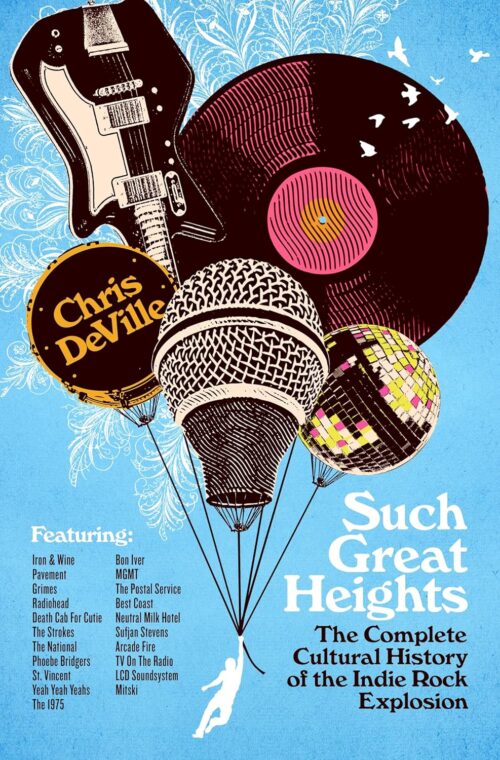
This was kind of an odd pick for me. I’m old enough to have lived through the Indie Rock “explosion” referred to in Chris DeVille’s title, but I wasn’t really all that involved or invested in the scene at that time. So it’s kind of odd to hear (I listened to the audiobook) the author refer to stuff that occurred in my lifetime as though it was of great cultural importance when it had very little impact on me.
Sometimes it is interesting, as when DeVille recounts how crucial it was for indie bands that characters on The O.C. (a show I didn’t watch) listened to their songs. Or how Napster changed the way people listened to music, allowing people to freely sample a wider variety of artists and genres as opposed to having to spend money on physical copies of music. I also enjoyed some of DeVille’s references to cultural ephemera. I’d forgotten how annoyed mainstream music fans were when Arcade Fire, a band most non-indie fans had never heard of, won the Grammy for Album of the Year.
I was more familiar with the bands and moments that came up for discussion in the back half of the book, as I’ve listened to a lot more indie music in recent years, although (and DeVille himself goes into this) the definition of “indie” has been stretched so widely it’s hard to really say what it is or isn’t anymore. When Taylor Swift can release two (great) albums that are called “indie”, does the term have any usefulness?
The bottom line is that if you don’t have an encyclopedic knowledge of the bands involved in this movement, I’m not sure DeVille’s general description of their sound would really clue you in to what the indie music was all about. And if you do have an encyclopedic knowledge of the bands involved, why would you need to read some other guy’s thoughts on the subject?
That’s unfair to DeVille, who really does seem to have command of his subject matter. Perhaps, like many a Pitchfork reviewer over the years, I don’t know what the heck I’m talking about.
