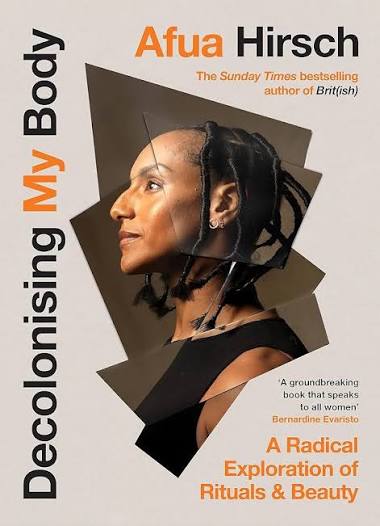
 I appreciate the work of Afua Hirsch. Her work is usually reflective, involving a level of personal analysis of her own life and heritage alongside her commentary on various issues (race, gender, identity). This reflection is the main narrative through this book as she analyses various dominant Western (European?/Global cultural?) beliefs about the body, looking at beauty, sexuality, skin (tatoos), and even death. It feels like a more personal continuation of her previous work Brit(ish) focusing on her own journey to understand these as she enters middle age.
Hirsch focuses mainly on her own Ghanian heritage, which is fascinating especially her own mother’s journey from someone who was raised to embrace Westernisation to recognising that something intangible but important had been lost along the way.
There’s also much made of the Amazigh/Berber (some Amazigh consider latter to be a racist term so I’m not going to use it again) cultural norms and heritage, especially around the tradition of face tattoos on women. It’s an interesting discussion, and one which connects more with me as I’m currently living in Morocco, but lacks the cultural context where Amazigh culture was purposefully neglected until more recently when it’s been reclaimed as part of a change in national narrative away from centering Arab culture to a Pan-African one.
Decolonisation is very much a hot button topic, one of those phrases like “critical race theory” that seems scary to the dominant (read white) cultural hegemony but I’m not sure this book really works as a decolonising text (although this is very fair outside my own understanding so could and probably am entirely wrong). This book is very interesting, but I’m not sure it challenges the structural and institutional reasons behind the centering of Western body standards nor that they have evolved as she also discusses.
