While I read the entire trilogy rather closely together, I reviewed the first novel much earlier in the year. These are large books so it seemed like they each deserved their own review rather than a series review but it was harder for me to articulate my thoughts about the second and third novel. And now, I’m having a hard time entirely distinguishing which parts happened in book 2 vs 3.
I had seen some tag lines for this series that compared it to The Wheel of Time and I really didn’t see it in the first book but starting in the second novel, those comparisons really made much more sense to me, at least at a high level but it’s a very different spin.
The Echo of Things to Come
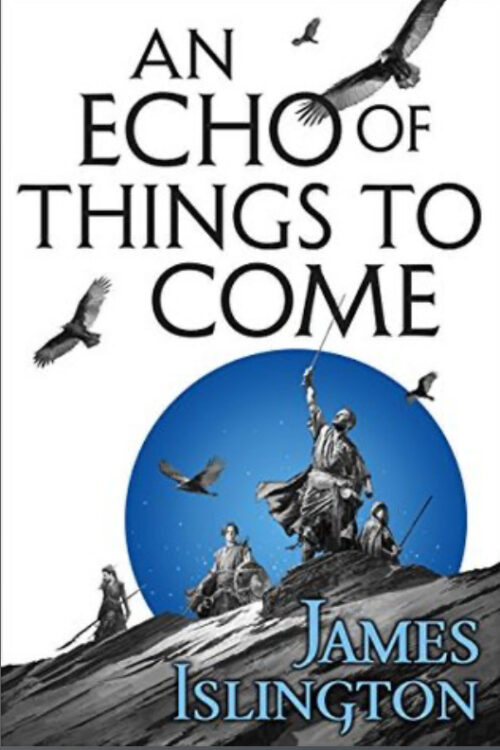
Basically, in the second novel, we get a lot of flashback scenes from Caeden as he slowly remembers his previous life and his plan. I usually love a flashback scene but in this case, there were so many that it was almost distracting and disorienting. This is also where it becomes clear that while Davian, Asha and Wirr are all important characters, it’s Caeden that is the main character of the trilogy, not Davian.
As far as the WoT connect/twist, we learn more about the pantheon of gods and myth of this world, and how they are all based on Caeden and his 11 friends, all with unique powers that have allowed them to live for centuries. Everything they have done, good and bad, has all been for the greater good under the direction of a higher force. But … what if they were misguided? What if the force of good they serve is actually the evil they should be fighting? So it’s basically the idea of the Forsaken and the Dark One of Wheel of Time (and a myriad of other stories) except that we don’t know who is good or bad. Is Caeden mistaken to doubt or did he serve evil, thinking he was doing good?
The Light of All That Falls
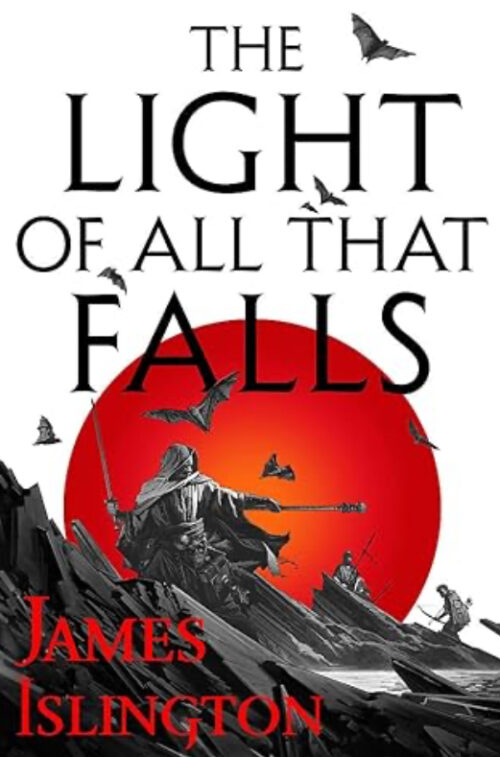
In ways, this one went a little bit darker than I would have wanted. Davian, Asha and Wirr are leading a battle for the world and the cost and casualties are enormous. I’m not used to losing this many characters anymore when reading.
Despite that, I preferred this one to the second novel since it was slightly more straightforward, though still incredibly dense and complex. That really is the impressive part about this entire trilogy: the way Islington put together all the pieces crossing time and space to make it all work. It makes my brain hurt to even think about the plotting involved to put this all together.
There are two characters that were introduced in the first novel but end up spending most of their time in this novel (and maybe the second novel?) off screen that finally make their return here. It was either in the afterword of this novel or a blog post I found but Islington originally had their story written out before realizing it was breaking up the narrative and also just too much. But basically, there could still be a book there that explores the side quest of these two characters, and I for one would very much like to read that novel. After he finishes the Hierarchy series (I’m still not sure if Islington has determined or shared how many books he will need or whether it will end as a trilogy).
