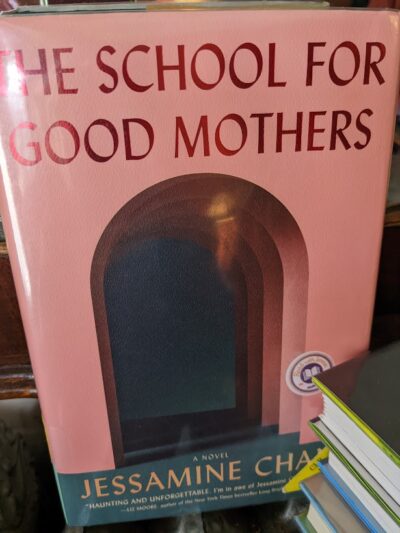
 CBR14 BINGO: Rec’d Square
(Barack Obama’s Summer 2022 Reading List. And, just about everybody’s book club recommends this.)
This is a really tough one to review without giving BIG plot points away. Proceed with caution.
It’s easy to feel guilty when you’re a mother. When my son was born almost 7 weeks early, a social worker came to visit me in my hospital room while he was still in the NICU. From what I remember from that day 17 years ago, the social worker was kind to me. I was, however, caught off guard by the whole thing. She asked me questions about drug and alcohol usage. Asked if I had experienced any difficulties during my pregnancy. Did I seek appropriate medical care? Did I smoke?
I got the why of this visit. I understood the reasons for what I assumed were standard questions, but I can still feel my wariness. The worry that if she even suspected that I had done something to cause his early birth he could be taken from me. The feeling that I might be judged by criteria that were unknown to me had me questioning a lot of things. Was that long walk from the bus stop to work in the heat of the summer too far? Should I have done a better job at not gaining too much weight while I was pregnant? Was it selfish of me to have a baby at 38? (Yes, it is not lost on me that those were the luxurious worries of a married white woman with health insurance and adequate prenatal care.)
Beyond “official” judgment, the microscope of other mothers and the curated lens of social media makes it even worse for new mothers now. While I did have my son at the apex of mommy blogging, I didn’t have Instagram serving up perfectly fresh-faced bright-eyed mothers with happy newborns that slept through the night and latched perfectly on their first feeding.
All that is to say, the basic premise of this book is deceptively simple: What is a “good” mother, and who defines it?
Struggling with postpartum depression, Frida is blindsided by her husband’s infidelity and their resulting divorce. While their toddler, Harriet, seems to thrive in the Instagram-perfect setting of her ex-husband’s house under the loving gaze of his much younger girlfriend, Frida struggles when she has Harriet. She is on her own while caring for her daughter, maintaining her job, keeping her house, and mourning the loss of the family she thought she was building.
When the load becomes unbearable, Frida makes a terrible decision that puts her child in jeopardy. Desperate to make amends for her actions and to maintain her custody arrangement with her husband, she accepts the only option afforded to her: a new government program to rehabilitate bad parents.
This is one of those riveting scare reads. You can’t put it down but the ride is enjoyable precisely because it’s so terrifying. It’s the relief that it isn’t you that this is happening to combined with the worry that it easily could have been. Weirdly, it’s a cross between A Handmaid’s Tale and Klara and The Sun. It’s a frighteningly believable dystopian present full of impossible expectations and unattainable requirements. I even hesitate to call this dystopian. Far too many people already contend with a system where parental competency is judged by artificial means and outward appearances.
