I picked up two fairy tale books to read that I didn’t realize had the same illustrator, Sophie Bass – and it turns out they go so beautifully together!
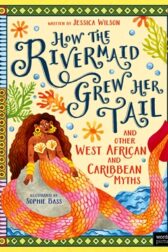 The first is a folklore collection, How the Rivermaid Grew Her Tale and Other West African and Caribbean Myths by Jessica Wilson. This is aimed at an upper elementary/middle grade audience, but would be loved by anyone interested in folklore. Wilson offers a mix of traditional folktales (“How Anansi Became the King of Stories,” “Why the Sun and Moon Live in the Sky”) as well as her own remixes of folktales to fit kids’ modern era. “How George Grew Wings” is a remix of “The People Could Fly” inspired by George Floyd and the Black Lives Matter movement, and the title story is a prequel Wilson wrote about Jamaica’s River Mumma, and how she went from a rivermaid to a mermaid. That one is one of my favorites in the collection; the rivermaid feels very between worlds, which I imagine was very true to early African inhabitants forced from their homes to Jamaica and others forced into the diaspora of today. Despite the heavy themes, it’s a light collection and the illustrations by Bass are DROOL-WORTHY. A mix of illuminated margins and two-page spreads.
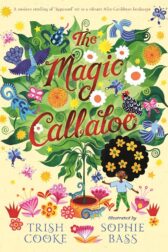 Now The Magic Callalou by Trish Cooke is more of a fractured fairy tale: a remix of Rapunzel inspired by the maps and codes enslaved people wove into their cornrows. Hot damn, what an incredible premise, and the story follows through on it beautifully! The callalou is a magical tree with leaves that grant wishes to those who eat them, but a greedy man steals it for himself, leaving its former community in need. The parents we meet long for a child, so the father steals a leaf from the greedy man and initially gets away with it – his wife eats it, and they have a beautiful daughter whose hair grows large and wild like the tree that gave her life. Eventually the greedy man encounters their daughter and recognizes the tree’s magic in her, so he abducts her. But a wise woman who sees the girl being neglected by her kidnapper offers to braid her hair, and in doing so, gives the girl a map home. OMG it’s SO GOOD???!?! The story is a little lengthy for young readers, so it’s a unique picture book in that it’s probably best suited to 2nd, 3rd, 4th grade readalouds, and I look forward to sharing it for a classroom read in the future and discussing how folklore can be used to tell real stories. So lovely!
