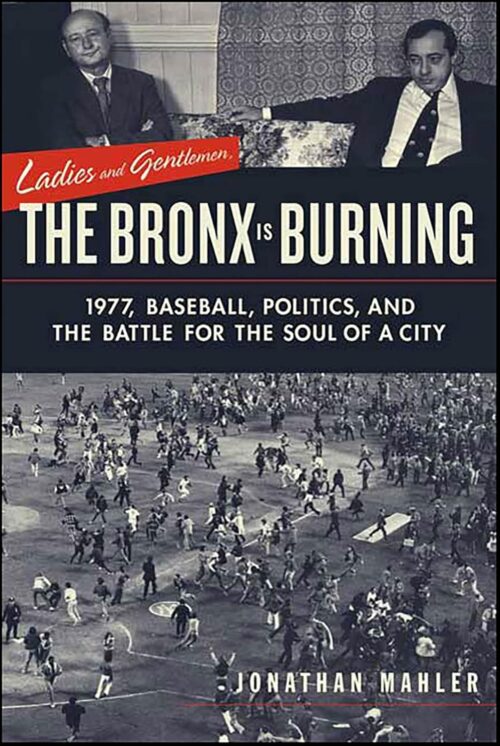
Jonathan Mahler’s Ladies and Gentleman, the Bronx is Burning is an unusual work of non-fiction, blending sports, news, culture, and politics into a fairly comprehensive narrative of life in New York City in the year 1977. It was a dark time in the city. Years of excessive spending on social programs had the city teetering on the brink of bankruptcy, and despite promises made by newly-elected President Jimmy Carter, help was not on the way.
It was an election year in the city, with Mayor Abe Beame trying to earn a second term. Elected for his financial wherewithal, his inability to wrangle the city’s books under control made him vulnerable. Three huge names threw their hats into the ring: Bella Abzug, a left-wing firebrand who had worn out her welcome in the U.S. House of Representatives, Mario Cuomo, the hand-picked choice of New York Governor Hugh Carey, and Congressman Ed Koch, who managed to temper his liberal policies to meet the anti-spending, anti-crime moment.
The election campaign had to share space in the headlines in the summer of 1977. The serial killer know as the .44 killer and later the “Son of Sam” was on the loose for the first half of the year, terrorizing the city with his random attacks. A citywide blackout during a mid-July heat wave sparked a night of horrific looting and civil unrest. Over 3,700 people were arrested by an overwhelmed and undermanned police force still reeling from the firing of thousands of officers under Mayor Beame. They clogged the city jails and courtrooms, disrupting the entire system. The lawlessness outraged many citizens, and prompted hard questions for all the mayoral candidates about how they would handle such a situation if they were elected.
Meanwhile, Mahler’s other main focus is on the New York Yankees. Much like the city they called home, the Yankees were in a time of turbulence. Having been embarrassed by a four-game sweep at the hands of the Reds in the 1976 World Series, owner George Steinbrenner made a huge splash in the off-season, signing outfielder Reggie Jackson to a contract that would make him the highest-paid player in baseball.
Jackson was a new kind of baseball superstar in New York. An unapologetically outspoken Black man, he demanded star-treatment. His ego had a way of alienating teammates, especially hard-nosed catcher Thurman Munson, a favorite among Yankee fans. It also infuriated his manager, the temperamental Billy Martin. Martin, who had survived in the big leagues as a scrawny infielder because of his competitive fire and determination, couldn’t stand his strikeout-prone, defensively-challenged slugger. Their conflict would famously bubble over into a physical confrontation in the dugout at Fenway Park. Even when the Yankees put it together and became a winning ballclub at the end of the season and throughout the playoffs, conflicts between Steinbrenner, Martin, and Jackson were near-constant.
The book is an ambitious project, and Mahler does a pretty good job covering so much ground. There were times when I thought the pacing or the balancing was a little off. Mahler refrains from bringing up Son of Sam until quite late in the day, for some reason. He spends a lot of time on the blackout, which is fair, but before and after had ping-ponged back forth between baseball and non-baseball quite effectively, so it felt a little off. I also thought Mahler was rushing a bit near the end, covering an exciting playoff series against Kansas City and an eventful World Series against the Dodgers in relatively scant detail. Similarly, because Mahler wants to end with the Yankees triumph, he essentially ignores the mayoral election after the close of the Democratic Party runoff, in which Ed Koch defeated Mario Cuomo.
Still, these are minor flaws in an otherwise excellent telling of a fascinating time in history. It’s hard to really fathom so many huge events happening in so brief a period of time, and Mahler brings it all to life on the page.
